Lady Macbeth - ENTJ Personality Type

Lady Macbeth

ENTJ - Commander

Category

Literature

Nationality

Scottish (Kingdom of Scotland)

Occupation

Noblewoman, Queen of Scotland (briefly)

About Lady Macbeth

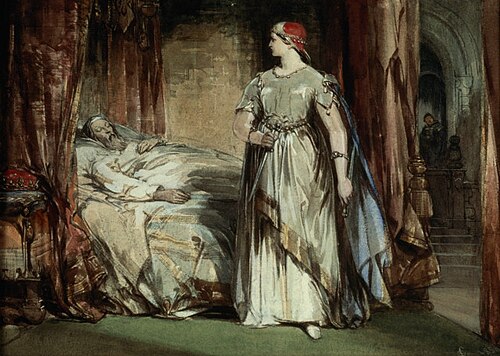
A fictional character from William Shakespeare's tragedy 'Macbeth'. She is the ambitious and ruthless wife of Macbeth, known for her pivotal role in manipulating him to murder King Duncan to seize the throne. Her eventual descent into guilt-driven madness and suicide is a central element of the play's exploration of ambition and morality.

Personality Profile: ENTJ

Confidence: 85%

Personality Analysis

Lady Macbeth is a quintessential ENTJ, dominated by Extraverted Thinking (Te). Her primary mode of operation is to organize the external world efficiently to achieve her goals. She is a master strategist and tactician, formulating the plan for Duncan’s murder and systematically breaking down Macbeth’s reservations with ruthless logic. She values effectiveness, power, and results above all else, famously calling on spirits to ‘unsex’ her and fill her with ‘direst cruelty,’ demonstrating a conscious suppression of feeling in favor of cold, instrumental action. Her auxiliary function is Introverted Intuition (Ni), which provides her with a singular, visionary focus on the future outcome she desires: seeing herself and Macbeth as monarchs. This Ni-driven vision is so potent that it blinds her to the moral and emotional realities of their actions. Her tertiary Extraverted Sensing (Se) is evident in her immediate, forceful engagement with the present moment, such as taking charge of the murder scene by planting the daggers and smearing the guards with blood. Her inferior, and tragically underdeveloped, function is Introverted Feeling (Fi). She actively represses her personal morals and empathy, viewing them as weaknesses. However, this repressed Fi erupts uncontrollably later in the play, manifesting as the profound guilt and psychological torment seen in her sleepwalking scene, where she desperately tries to cleanse an invisible bloodstain—a symbol of her corrupted inner value system.

Supporting Evidence

Her dominant Te is displayed in Act I, Scene 7, where she systematically rebuts all of Macbeth’s objections to the murder with logical, taunting arguments, questioning his manhood and commitment. Her auxiliary Ni is clear in her initial reaction to the witches’ prophecy; she immediately grasps its significance and forms a long-term plan for kingship, stating ‘Glamis thou art, and Cawdor; and shalt be What thou art promised.’ Her inferior Fi’s catastrophic eruption is the central tragedy of her arc, exemplified in the famous sleepwalking scene (Act V, Scene 1), where her subconscious guilt manifests as compulsive hand-washing and the lament ‘Out, damned spot! out, I say!’ This is the return of the repressed values and empathy she had earlier scorned, now destroying her psyche.

Cognitive Function Stack

Confidence: 85%

The cognitive function stack represents how an individual processes information and makes decisions based on Jungian personality type theory.

Auxiliary Function: Ni

Introverted Intuition - Perceiving underlying patterns and developing long-range visions.

Dominant Function: Te

Extraverted Thinking - Organizing and structuring the external world logically and efficiently.

Inferior Function: Fi

Introverted Feeling - Making decisions based on internal values and personal ethics.

Tertiary Function: Se

Extraverted Sensing - Experiencing and interacting with the immediate environment.

Enneagram Personality Profile:

Confidence: 85%

8w7

Big Five Personality Traits

Confidence: 85%

The Big Five personality traits represent the five broad dimensions of personality that are commonly used to describe human personality.

Openness 0%
Conscientiousness 0%
Extraversion 0%
Agreeableness 0%
Neuroticism 0%

Similar ENTJ Characters

Explore other characters with similar personality traits