Ludwig van Beethoven - INTP Personality Type

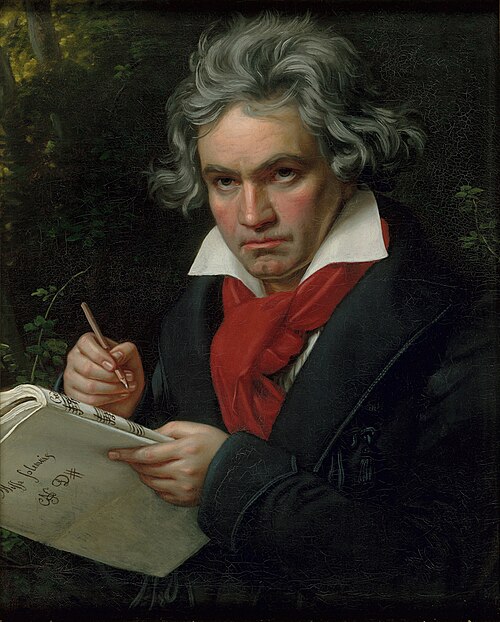
Ludwig van Beethoven

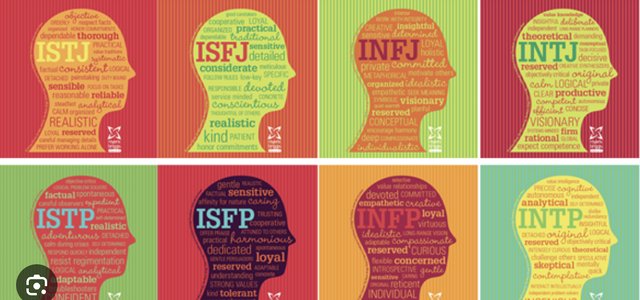
INTP - Logician

Category

Music

Nationality

German

Occupation

Composer, Pianist

About Ludwig van Beethoven

Ludwig van Beethoven was a German composer and pianist, a pivotal figure in the transition between the Classical and Romantic eras in Western art music. He is renowned for his symphonies, sonatas, and string quartets, and is celebrated for his artistic innovation and personal triumph over progressive hearing loss.

Personality Profile: INTP

Confidence: 85%

Personality Analysis

Beethoven exemplifies the INTP type, driven by a dominant Introverted Thinking (Ti). His entire creative process was an internal, logical construction of musical architecture. He was less concerned with pleasing contemporary audiences (inferior Extraverted Feeling - Fe) than with solving complex compositional problems according to his own rigorous internal standards. His notebooks show endless tinkering with motifs, deconstructing and rebuilding them until they satisfied his logical and aesthetic criteria. This Ti dominance made him fiercely independent, intellectually arrogant, and often contemptuous of social and artistic conventions. His auxiliary Extraverted Intuition (Ne) fueled his boundless innovation. Beethoven constantly explored new possibilities, pushing harmonic boundaries, expanding forms, and integrating unexpected elements into his work. The sudden shifts, dramatic contrasts, and sheer scope of pieces like the ‘Eroica’ Symphony or the late string quartets reveal an Ne mind exploring uncharted artistic territory. This function, paired with Ti, made him a revolutionary who saw music not as decoration but as a profound intellectual and emotional exploration. His tertiary Introverted Sensing (Si) is evident in his deep study and initial mastery of Classical forms (Haydn, Mozart) which he used as a foundation to then radically transform. His famous thematic development—taking a simple motif and evolving it throughout a movement—shows a use of past material (Si) subjected to transformative logic (Ti) and imaginative possibility (Ne). His inferior Fe manifested in a deep, often frustrated, desire for idealistic human connection (e.g., the ‘Ode to Joy’ in the Ninth Symphony) clashing with profound personal isolation, social clumsiness, and volcanic outbursts of temper. His personal relationships were notoriously turbulent, marked by paranoia and conflict, showing the immature, undeveloped side of his feeling function.

Supporting Evidence

His compositional process, documented in sketchbooks, reveals relentless Ti logic: he would labor over a single phrase for years, creating dozens of variations to find the most logically perfect development. His defiance of patronage norms, famously ripping the dedication page of the ‘Eroica’ Symphony when Napoleon declared himself emperor, demonstrates Ti/Ne independence over Fe social harmony. The groundbreaking structure of works like the ‘Hammerklavier’ Sonata, which prioritized internal architectural innovation over audience accessibility, showcases Ti/Ne dominance. His personal life showed inferior Fe struggles: his passionate but doomed ‘Immortal Beloved’ letter reveals deep yearning for connection, while his bitter custody battle over his nephew Karl and numerous heated legal disputes with friends and patrons illustrate his inability to manage interpersonal emotions effectively.

Cognitive Function Stack

Confidence: 85%

The cognitive function stack represents how an individual processes information and makes decisions based on Jungian personality type theory.

Auxiliary Function: Ne

Extraverted Intuition - Seeing possibilities and connections in the external world.

Dominant Function: Ti

Introverted Thinking - Analyzing and categorizing information logically and precisely.

Inferior Function: Fe

Extraverted Feeling - Connecting with others and maintaining social harmony.

Tertiary Function: Si

Introverted Sensing - Recalling detailed information and maintaining traditions.

Enneagram Personality Profile:

Confidence: 85%

5w4

Big Five Personality Traits

Confidence: 85%

The Big Five personality traits represent the five broad dimensions of personality that are commonly used to describe human personality.

Openness 0%
Conscientiousness 0%
Extraversion 0%
Agreeableness 0%
Neuroticism 0%