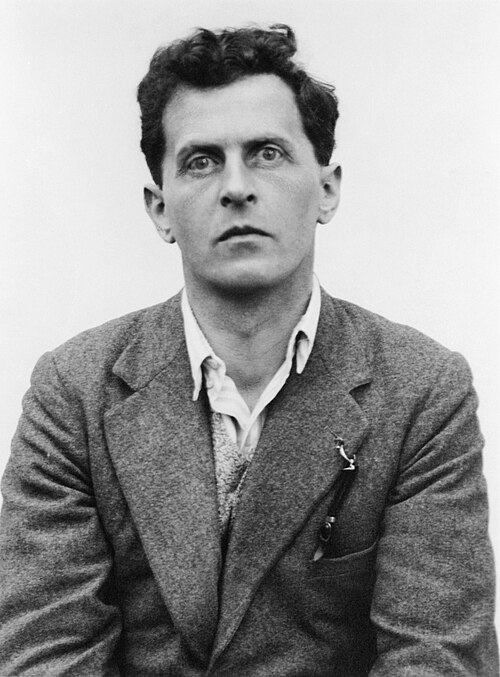
Ludwig Wittgenstein - INTP Personality Type

Ludwig Wittgenstein

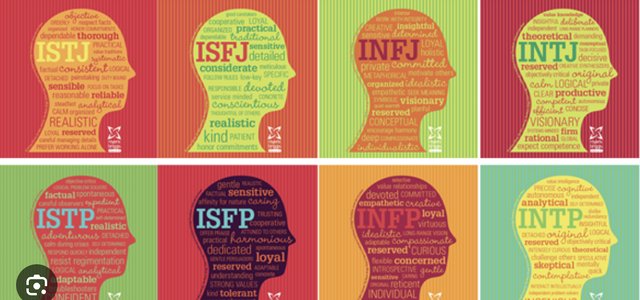
INTP - Logician

Category

Science

Nationality

Austrian (later British)

Occupation

Philosopher

About Ludwig Wittgenstein

Ludwig Wittgenstein was an Austrian-British philosopher who is considered one of the most important and influential thinkers of the 20th century. He is best known for his work in the philosophy of language, logic, and the mind, authoring the seminal 'Tractatus Logico-Philosophicus' and later developing a radically different approach in 'Philosophical Investigations'.

Personality Profile: INTP

Confidence: 85%

Personality Analysis

Wittgenstein exemplifies the INTP type through his dominant Introverted Thinking (Ti). His entire philosophical endeavor was an internal, systematic quest for crystalline logical structure and absolute conceptual clarity. He built and dismantled entire worldviews from the inside out, driven by an uncompromising need for internal coherence. His auxiliary Extraverted Intuition (Ne) is evident in his ability to generate novel philosophical perspectives and see problems from radically new angles, as seen in the stark shift from the ‘Tractatus’ to the ‘Investigations’. This function allowed him to explore the possibilities of language games and meaning-as-use, breaking from his own earlier dogmatism.

His interpersonal dynamics were heavily strained by his inferior Extraverted Feeling (Fe). He was often perceived as intense, impatient, and socially abrasive, struggling with conventional emotional expression and group harmony. His relationships were marked by deep loyalty but also by demanding intellectual standards and occasional cruelty. The tertiary Introverted Sensing (Si) manifested in his reverence for certain traditions (like Austrian rural life and Russian mysticism) and in his meticulous, almost ritualistic attention to detail in his work and teaching, often revisiting and refining the same problems for years.

Growth areas for an INTP like Wittgenstein involve integrating the inferior Fe, which for him meant grappling with the ethical and communal dimensions of life. His later work, which emphasized the social and practical context of language, can be seen as a move in this direction, acknowledging that meaning is not a private, logical calculus but a public, lived activity. His legendary self-criticism and periods of despair also point to the struggles of an INTP whose towering Ti structures are found to be incomplete, forcing a painful but fruitful engagement with the messier, more human aspects of existence his inferior function represents.

Supporting Evidence

His masterpiece, the ‘Tractatus’, is a pure Ti construct—an attempt to build a perfect, logical model of the relationship between language and the world. His famous change of heart, leading him to reject the ‘Tractatus’ and develop the ‘language-game’ concept in ‘Philosophical Investigations’, demonstrates dominant Ti self-correction fueled by auxiliary Ne exploration. His personal life—giving away his immense inheritance, working as a rural schoolteacher, and living in spartan conditions—reflects an asceticism consistent with an INTP’s disregard for material Fe/Si comforts. His teaching style at Cambridge, described as intense, solitary, and conducted often during long walks, bypassed traditional Fe/Si structures for direct Ti-Ne engagement. His reported social difficulties, such as storming out of meetings or staring intently in silence, highlight the underdeveloped Fe and preference for internal processing.

Cognitive Function Stack

Confidence: 85%

The cognitive function stack represents how an individual processes information and makes decisions based on Jungian personality type theory.

Auxiliary Function: Ne

Extraverted Intuition - Seeing possibilities and connections in the external world.

Dominant Function: Ti

Introverted Thinking - Analyzing and categorizing information logically and precisely.

Inferior Function: Fe

Extraverted Feeling - Connecting with others and maintaining social harmony.

Tertiary Function: Si

Introverted Sensing - Recalling detailed information and maintaining traditions.

Enneagram Personality Profile:

Confidence: 85%

5w4

Big Five Personality Traits

Confidence: 85%

The Big Five personality traits represent the five broad dimensions of personality that are commonly used to describe human personality.

Openness 0%
Conscientiousness 0%
Extraversion 0%
Agreeableness 0%
Neuroticism 0%