Mansa Musa - ESTJ Personality Type

Mansa Musa

ESTJ - Executive

Category

History

Nationality

Malian (Mali Empire)

Occupation

Emperor (Mansa)

About Mansa Musa

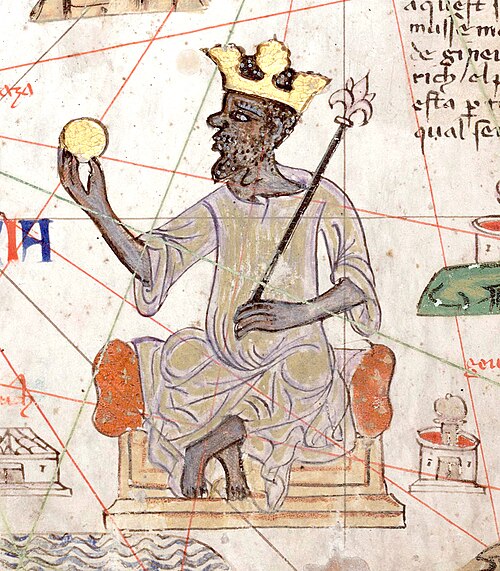
Mansa Musa was the ninth ruler of the Mali Empire in West Africa, reigning from c. 1312 to 1337 CE. He is renowned as one of the wealthiest individuals in history, known for his immense empire, promotion of Islam, and his legendary pilgrimage to Mecca, which showcased Mali's vast riches and altered economies along his route.

Personality Profile: ESTJ

Confidence: 85%

Personality Analysis

Mansa Musa’s personality strongly aligns with the ESTJ (The Executive) type, characterized by a dominant Extraverted Thinking (Te) function. This is evident in his highly organized, pragmatic, and results-oriented approach to governance. He focused on building efficient systems for trade, administration, and military control, expanding the Mali Empire into a well-structured and prosperous entity. His leadership style was direct, authoritative, and decisive, aiming for tangible outcomes like wealth, stability, and the empire’s global reputation. His auxiliary function, Introverted Sensing (Si), grounded him in tradition and established practices. He respected the imperial legacy, maintained and expanded upon existing trade routes and governance structures, and used his pilgrimage not just for religious devotion but to reinforce Mali’s established place in the Islamic and global world. His tertiary Extraverted Intuition (Ne) was seen in his visionary, large-scale projects and his ability to perceive the long-term diplomatic and economic opportunities his pilgrimage presented, while his inferior Introverted Feeling (Fi) manifests in his grand, public expressions of personal faith and generosity, which, though deeply felt, were also channeled into strengthening his legacy and the empire’s image.

Supporting Evidence

His legendary Hajj (1324-1325) demonstrates his Te/Si/Ne functions: it was a meticulously planned logistical feat (Te) following a traditional religious duty (Si) that resulted in massive economic and diplomatic impacts, showcasing Mali’s power to new regions (Ne). The construction of the Djinguereber Mosque in Timbuktu and his patronage of scholars and architects show Te-driven institution-building and Si respect for religious and intellectual tradition. His administration of a vast, wealthy empire with complex trade networks required highly developed Te organizational skills. His distribution of immense amounts of gold in Cairo, while an act of piety and generosity (inferior Fi), had the calculated effect (Te) of establishing his legendary status and disrupting regional economies to demonstrate his power.

Cognitive Function Stack

Confidence: 85%

The cognitive function stack represents how an individual processes information and makes decisions based on Jungian personality type theory.

Auxiliary Function: Si

Introverted Sensing - Recalling detailed information and maintaining traditions.

Dominant Function: Te

Extraverted Thinking - Organizing and structuring the external world logically and efficiently.

Inferior Function: Fi

Introverted Feeling - Making decisions based on internal values and personal ethics.

Tertiary Function: Ne

Extraverted Intuition - Seeing possibilities and connections in the external world.

Enneagram Personality Profile:

Confidence: 85%

8w9

Big Five Personality Traits

Confidence: 85%

The Big Five personality traits represent the five broad dimensions of personality that are commonly used to describe human personality.

Openness 0%
Conscientiousness 0%
Extraversion 0%
Agreeableness 0%
Neuroticism 0%

Similar ESTJ Characters

Explore other characters with similar personality traits