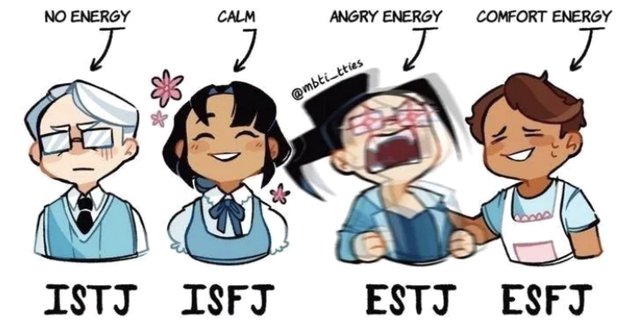
Patrick Bateman - ESTJ Personality Type

Patrick Bateman

ESTJ - Executive

Category

Fiction

Nationality

American

Occupation

Investment Banker (Vice President at Pierce & Pierce)

About Patrick Bateman

Patrick Bateman is the fictional protagonist and narrator of Bret Easton Ellis's 1991 novel 'American Psycho' and its 2000 film adaptation. He is a wealthy, young investment banker in 1980s Manhattan who leads a meticulously constructed life of superficial luxury while secretly harboring a psychopathic alter ego driven by homicidal rage and extreme narcissism. He is known as a cultural icon of soulless consumerism, identity crisis, and monstrous violence hidden behind a facade of yuppie conformity.

Personality Profile: ESTJ

Confidence: 85%

Personality Analysis

Patrick Bateman is a textbook, albeit pathological, ESTJ. His dominant Extraverted Thinking (Te) is evident in his relentless focus on efficiency, status, and external systems of value. He views the world as a hierarchy to be mastered, judging everyone by their material possessions, business card aesthetics, and restaurant reservations. His decisions are driven by a cold, logical calculus aimed at maintaining his social position and executing his violent whims, which he rationalizes with a detached, procedural mindset. His auxiliary Introverted Sensing (Si) manifests in his obsessive, ritualistic adherence to routines—his meticulous skincare regimen, his detailed cataloging of consumer products, and his reliance on established social norms to blend in. This Si-Te loop creates his rigid, conformist exterior, providing a stable structure for his life and a mask for his chaos.

His interpersonal dynamics are entirely transactional and status-based, devoid of authentic feeling. He mirrors the behavior and opinions of those around him, unable to access a true sense of self. This points to his severely underdeveloped and repressed inferior function, Introverted Feeling (Fi). His inability to connect with genuine emotions, morals, or personal identity creates a void he attempts to fill with external validation and, horrifically, with the intense sensory stimulation of violence. His tertiary Extraverted Intuition (Ne) emerges in distorted ways, feeding paranoid fantasies about others’ perceptions of him and generating the elaborate, often absurd, scenarios for his murders.

Bateman’s personality represents a grotesque caricature of the ESTJ’s potential shadow. His Te is not used for leadership or organization for a greater good, but for personal aggrandizement and the systematic execution of his darkest impulses. His Si is not used for thoughtful recall of tradition or experience, but for sterile repetition and comparison. His growth areas—developing genuine Fi (empathy, personal values) and healthy Ne (openness to possibilities beyond status)—are completely inaccessible to him due to his profound psychopathy. He is trapped in a hellish loop of Te-Si literalism, where people are objects and life is a series of performances to be critiqued.


Supporting Evidence

His infamous morning routine, detailed with clinical precision, showcases Te-Si dominance in maintaining a flawless external presentation. The business card scene, where he and his colleagues engage in a tense comparison of font, color, and texture, demonstrates his Te-driven status anxiety and Si’s focus on minute sensory details as markers of worth. His murders are often planned and executed with a cold, logistical efficiency (Te), followed by fastidious clean-up routines (Si). His constant voiceovers analyzing the music of Huey Lewis and Phil Collins, or dissecting fashion trends, reveal his attempt to use external systems (Te) to understand and critique a world he cannot feel. Finally, his frequent moments of being mistaken for other similarly dressed yuppies, and his own existential confusion (‘I simply am not there’), underscore the complete absence of a true inner self (inferior Fi).

Cognitive Function Stack

Confidence: 85%

The cognitive function stack represents how an individual processes information and makes decisions based on Jungian personality type theory.

Auxiliary Function: Si

Introverted Sensing - Recalling detailed information and maintaining traditions.

Dominant Function: Te

Extraverted Thinking - Organizing and structuring the external world logically and efficiently.

Inferior Function: Fi

Introverted Feeling - Making decisions based on internal values and personal ethics.

Tertiary Function: Ne

Extraverted Intuition - Seeing possibilities and connections in the external world.

Enneagram Personality Profile:

Confidence: 85%

3w4

Big Five Personality Traits

Confidence: 85%

The Big Five personality traits represent the five broad dimensions of personality that are commonly used to describe human personality.

Openness 0%
Conscientiousness 0%
Extraversion 0%
Agreeableness 0%
Neuroticism 0%

Similar ESTJ Characters

Explore other characters with similar personality traits