Mary Wollstonecraft - INTP Personality Type

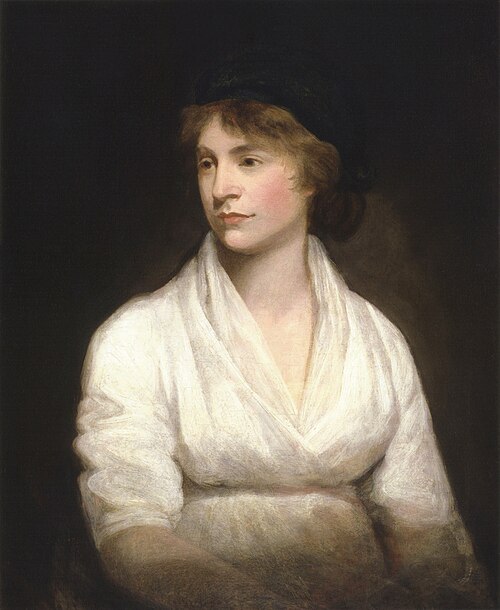
Mary Wollstonecraft

INTP - Logician

Category

Literature

Nationality

British

Occupation

Writer, Philosopher

About Mary Wollstonecraft

Mary Wollstonecraft was an 18th-century English writer, philosopher, and pioneering advocate for women's rights. She is best known for her seminal work, 'A Vindication of the Rights of Woman' (1792), which argued that women are not naturally inferior to men but appear so due to a lack of education. Her radical ideas laid the foundation for modern feminism and challenged the social and political structures of her time.

Personality Profile: INTP

Confidence: 85%

Personality Analysis

Mary Wollstonecraft is a quintessential INTP, guided by a dominant Introverted Thinking (Ti) function. Her life’s work was an exercise in building a coherent, logical internal framework to understand and critique the world, particularly the status of women. She meticulously deconstructed prevailing social and philosophical assumptions, subjecting them to rigorous logical analysis to expose their contradictions. This Ti-driven process sought to establish a new, rational system for human rights and education, demonstrating the INTP’s desire for intellectual precision and internal consistency. Her decision-making was fundamentally principle-based, derived from this logical framework rather than external tradition or emotion. Her auxiliary Extraverted Intuition (Ne) provided the expansive, exploratory fuel for her Ti. Ne allowed her to perceive patterns, connections, and future possibilities within the social chaos of her era. She did not just critique; she proposed radical new possibilities for society, education, and gender relations. This Ne/Ti combination made her a visionary theorist, able to connect disparate ideas—from Rousseau’s philosophy to the realities of women’s lives—into a novel and groundbreaking synthesis. Interpersonally, her inferior Extraverted Feeling (Fe) manifests in her intense, often turbulent personal relationships and her powerful, if sometimes awkwardly expressed, passion for universal human dignity and justice. Her drive was for a logical, fair system for all, but her personal expression could be blunt and confrontational, struggling with the nuanced maintenance of social harmony. Wollstonecraft’s growth area, typical for an INTP, involved the integration of her inferior Fe. Her personal life was marked by intense emotional swings and unconventional choices that sometimes brought her public scorn and personal anguish. The mature expression of her type is seen in her later work, ‘Letters Written in Sweden, Norway, and Denmark,’ where a more developed, reflective, and emotionally nuanced perspective begins to blend with her analytical prowess. She remained, however, fundamentally a thinker who sought truth through reason, whose legacy is a system of ideas that continues to challenge and inspire.

Supporting Evidence

Her magnum opus, ‘A Vindication of the Rights of Woman,’ is a masterpiece of Ti/Ne analysis, systematically dismantling arguments for women’s inferiority and constructing a logical case for equal education. Her personal life demonstrated fierce independence and non-conformity (high Ti/Ne, low Fe), including her decision to travel alone to revolutionary France, her two unconventional love affairs outside of marriage, and her attempt at suicide after being abandoned. Her writing style is characteristically INTP: dense, analytical, and structured around core principles rather than emotional appeal or narrative. Furthermore, her wide-ranging intellectual curiosity (Ne) is evident in her diverse body of work, which included novels, a history of the French Revolution, a children’s book, and treatises on education and politics, all unified by her drive to analyze and improve social systems (Ti).

Cognitive Function Stack

Confidence: 85%

The cognitive function stack represents how an individual processes information and makes decisions based on Jungian personality type theory.

Auxiliary Function: Ne

Extraverted Intuition - Seeing possibilities and connections in the external world.

Dominant Function: Ti

Introverted Thinking - Analyzing and categorizing information logically and precisely.

Inferior Function: Fe

Extraverted Feeling - Connecting with others and maintaining social harmony.

Tertiary Function: Si

Introverted Sensing - Recalling detailed information and maintaining traditions.

Enneagram Personality Profile:

Confidence: 85%

5w4

Big Five Personality Traits

Confidence: 85%

The Big Five personality traits represent the five broad dimensions of personality that are commonly used to describe human personality.

Openness 0%
Conscientiousness 0%
Extraversion 0%
Agreeableness 0%
Neuroticism 0%