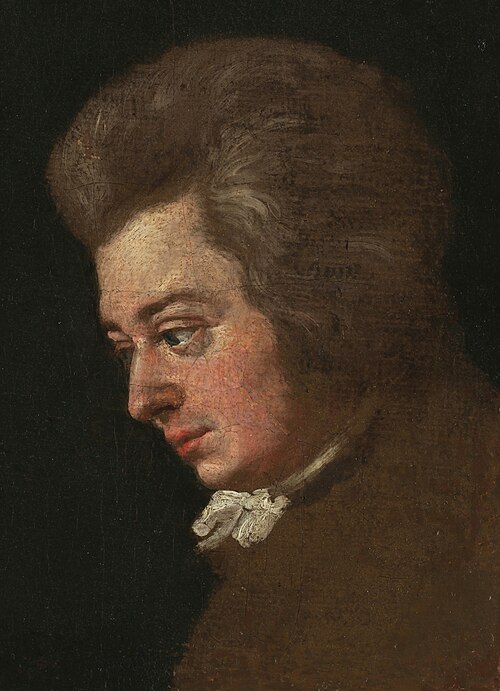
Mozart exemplifies the ENFP (Extraverted Intuition with Introverted Feeling) personality type. His dominant function, Extraverted Intuition (Ne), is evident in his boundless creativity and ability to generate endless musical possibilities, connections, and variations. He perceived the world as a playground of patterns and potentials, which he synthesized into revolutionary compositions. This function drove his improvisational flair, his love for novelty, and his tendency to work in inspired bursts rather than through rigid, pre-planned discipline.
His auxiliary function, Introverted Feeling (Fi), provided the internal moral and emotional compass that guided his work. His music is intensely personal and expressive, conveying a vast range of genuine human emotion, from profound sorrow to exuberant joy. This Fi fueled his famous disdain for hierarchical authority (like his conflict with Archbishop Colloredo) and his desire for personal freedom and authentic expression over societal expectations. He valued his own artistic vision and emotional truth above all.
The tertiary function, Extraverted Thinking (Te), manifested in his practical ability to organize and execute his prolific output with remarkable speed and efficiency. While his process seemed spontaneous, he possessed a formidable capacity for logical structure and practical workmanship, famously writing out near-perfect scores. His inferior function, Introverted Sensing (Si), represents his growth area and potential stress response. While he could masterfully utilize musical tradition, he often rebelled against it and lived in the present moment, with a noted carelessness with money and a disregard for future security, leading to financial instability.