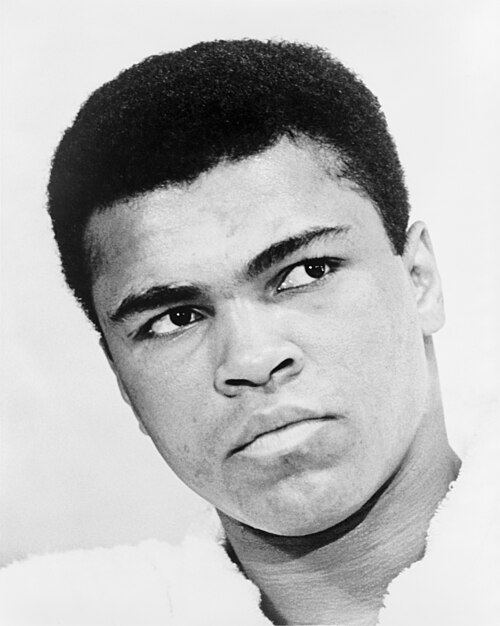
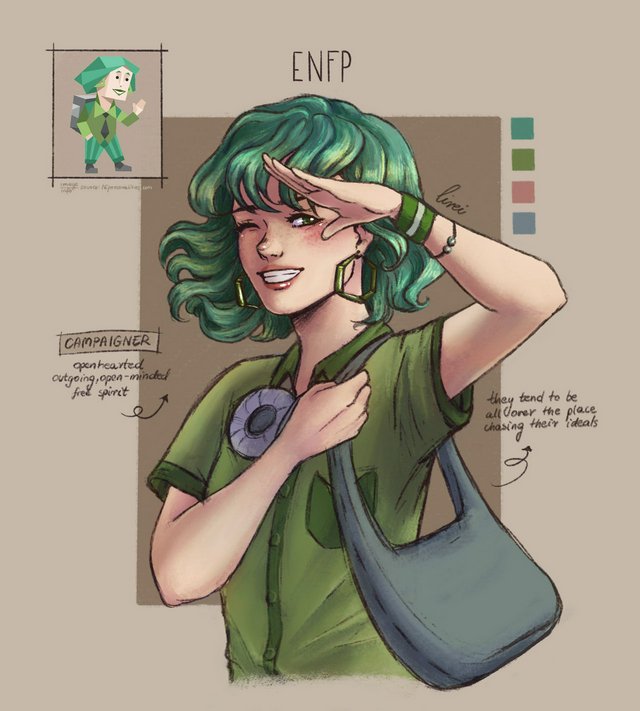
Muhammad Ali exemplifies the ENFP personality type, driven by Extraverted Intuition (Ne) and Introverted Feeling (Fi). His dominant Ne fueled his boundless creativity, wit, and ability to see possibilities everywhere. He didn’t just box; he created a persona, predicted rounds with poetic flair, and constantly reinvented his public image. This function made him adaptable, unpredictable in the ring, and a master of generating energy and excitement from external possibilities. His auxiliary Fi provided the core of his principled stance. His decisions, from changing his name to refusing the Vietnam draft, were not based on logic or tradition but on a deep, internal value system centered on faith, racial pride, and personal conviction. This Fi-Ne combination made him a charismatic revolutionary, inspiring others through a vision (Ne) rooted in heartfelt belief (Fi).
His tertiary Extraverted Thinking (Te) emerged in his strategic fight planning (“rope-a-dope”) and his sharp, logical put-downs of opponents and critics. However, it often served his Fi-driven agenda, used as a tool to defend his values and achieve his goals. His inferior Introverted Sensing (Si) showed in his occasional nostalgia for past glories and, later in life, in his reliance on ritual and routine as his health declined. In his prime, he famously rejected tradition and the “way things were done,” a classic Ne-dom disregard for Si.
As an Enneagram 7w8, his core desire for freedom, new experiences, and avoiding pain (Type 7) merged with the assertive, confrontational, and protective energy of the 8-wing. He was the entertainer and optimist, but also the challenger who would directly confront injustice. This blend explains his joyful braggadocio coupled with fierce, unwavering resistance to authority. His low Neuroticism score reflects his legendary confidence and mental resilience, while his moderate-to-low Agreeableness captures his combative nature, both in sport and in debate.