Niles Crane - INTP Personality Type

Niles Crane

INTP - Logician

Category

TV Show

Nationality

American

Occupation

Psychiatrist

About Niles Crane

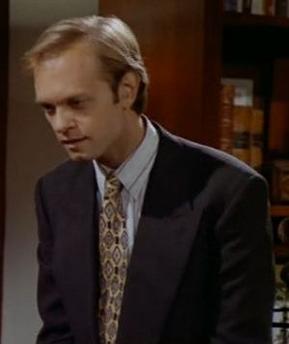
Niles Crane is a fictional psychiatrist and the younger brother of the main character, Frasier Crane, on the TV sitcom 'Frasier'. He is known for his extreme fastidiousness, intellectual snobbery, and deep-seated neuroticism, which are played for comedy. His significance lies in being a central comic foil, whose unrequited love for Daphne Moon and rivalry with his brother drive much of the series' humor and heart.

Personality Profile: INTP

Confidence: 85%

Personality Analysis

Niles Crane is a quintessential INTP. His dominant Introverted Thinking (Ti) is evident in his constant, internal analysis of the world. He deconstructs conversations, diagnoses everyone (often unsolicited), and operates on a strict internal logical framework. This Ti-driven need for precision extends to his physical environment, manifesting as germophobia and a love for order. His auxiliary Extraverted Intuition (Ne) allows him to make brilliant, unexpected connections and deliver razor-sharp, witty observations, often seeing multiple humorous possibilities in any situation. However, Ne also fuels his anxiety, as he constantly envisions potential disasters and social faux pas.

His tertiary Introverted Sensing (Si) is expressed in his nostalgia for a refined, ‘civilized’ past, his adherence to routine (like his cafe order), and his detailed, often painful, recollection of past embarrassments. This function, coupled with his Enneagram 6 wing, amplifies his need for security and predictability. His inferior Extraverted Feeling (Fe) is the source of his greatest struggles. He desperately desires social connection and love (especially with Daphne) but is hopelessly awkward in expressing genuine emotion directly. His attempts at Fe often come out as stilted, overly formal, or hidden behind intellectual banter, leading to comedic misunderstandings.

Niles’s growth throughout the series involves the gradual integration of his inferior Fe. As he pursues and eventually marries Daphne, he learns to express his feelings more openly and prioritize emotional realities over purely logical ones. However, he never loses his core INTP nature; his growth is in learning to operate outside his dominant Ti-Ne loop, allowing his repressed Fe to inform his decisions and relationships, making him a more balanced, though still delightfully neurotic, individual.

Supporting Evidence

His profession as a psychiatrist showcases his Ti-driven need to analyze and systematize human behavior. His elaborate, multi-step schemes to be near Daphne (like pretending to need a housekeeper or faking a heart condition) demonstrate Ne’s creative problem-solving in service of his inferior Fe desires. His physical comedy—fainting, sputtering, and having allergic reactions to chaos or strong emotion—visually represents the INTP’s struggle with overwhelming sensory (inferior Se shadow) and emotional (inferior Fe) stimuli. His rivalry with Frasier is often a battle of Ti logic and Ne wit, where he uses his intellectual agility to one-up his brother. Finally, his meticulous habits, like wiping down chairs and using handkerchiefs, are classic expressions of Ti-Si detail-orientation and anxiety.

Cognitive Function Stack

Confidence: 85%

The cognitive function stack represents how an individual processes information and makes decisions based on Jungian personality type theory.

Auxiliary Function: Ne

Extraverted Intuition - Seeing possibilities and connections in the external world.

Dominant Function: Ti

Introverted Thinking - Analyzing and categorizing information logically and precisely.

Inferior Function: Fe

Extraverted Feeling - Connecting with others and maintaining social harmony.

Tertiary Function: Si

Introverted Sensing - Recalling detailed information and maintaining traditions.

Enneagram Personality Profile:

Confidence: 85%

6w5

Big Five Personality Traits

Confidence: 85%

The Big Five personality traits represent the five broad dimensions of personality that are commonly used to describe human personality.

Openness 0%
Conscientiousness 0%
Extraversion 0%
Agreeableness 0%
Neuroticism 0%