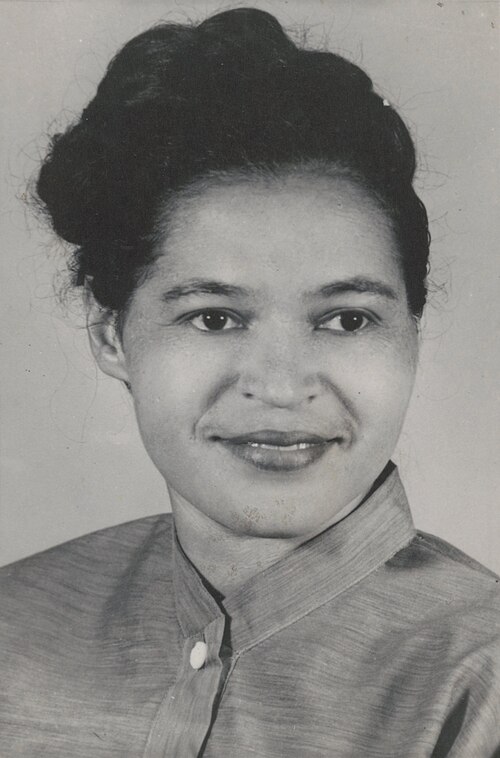
Rosa Parks’ personality aligns strongly with the ISFJ type, characterized by Introverted Sensing (Si) as her dominant function and Extraverted Feeling (Fe) as her auxiliary. Her decision-making was deeply rooted in a strong internal framework of personal values, community tradition, and a concrete sense of right and wrong, hallmarks of Si. She was not impulsive; her refusal was a calculated act of conscience, drawing upon a lifetime of experiences with racial injustice and a profound respect for her own dignity and that of her community. This demonstrates Si’s reliance on past experience and internalized facts to guide present action.
Her auxiliary Fe is evident in her motivation and interpersonal style. Her act was not for personal glory but was fueled by a deep concern for her community’s welfare and a desire for universal human dignity. She sought harmony and justice, not conflict for its own sake. Her quiet, respectful demeanor, even in defiance, reflects Fe’s desire to maintain social decorum while upholding a higher ethical principle. The tertiary function, Introverted Thinking (Ti), provided an internal logical structure to her values, allowing her to clearly reason why the segregation laws were unjust and why her stance was morally correct, even if it defied social convention.
The inferior function, Extraverted Intuition (Ne), represents an area of potential growth and stress. Parks was not a grand, abstract strategist; she was a woman of the here and now, acting on a specific, tangible injustice. However, the monumental, unforeseen consequences of her act—the boycott, the national spotlight, the legal challenges—forced her to engage with broader possibilities and future implications (Ne). Her growth involved stepping into a symbolic leadership role she did not initially seek, adapting to a life of public activism that required her to envision a radically different future for America.