Stephen Gary Wozniak - INTP Personality Type

Stephen Gary Wozniak

INTP - Logician

Category

Technology

Nationality

United States

Occupation

Computer Engineer, Inventor, Entrepreneur

About Stephen Gary Wozniak

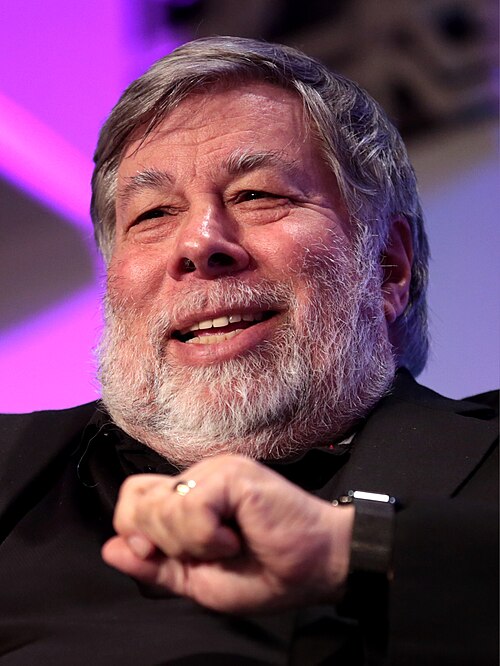
Steve Wozniak is an American electronics engineer, computer programmer, and philanthropist. He is best known as the co-founder of Apple Inc., alongside Steve Jobs, and is the primary designer of the Apple I and Apple II computers, which were pivotal in launching the personal computer revolution.

Personality Profile: INTP

Confidence: 85%

Personality Analysis

Steve Wozniak exemplifies the INTP personality type, driven by a dominant Introverted Thinking (Ti) function. His entire approach to engineering is rooted in an internal framework of logic, efficiency, and elegant simplicity. He was motivated by the intellectual challenge of creating something clever and functional, not by market demands or business strategy. This Ti dominance is evident in his meticulous, hands-on design process, where he personally architected the hardware and software of the Apple I and II with remarkable parsimony and ingenuity. His decision-making was almost purely based on what was logically optimal and technically beautiful, often to the bewilderment of more commercially-minded colleagues. His auxiliary Extraverted Intuition (Ne) fueled his visionary creativity and playful exploration of possibilities. Wozniak was not just a technician; he was a tinkerer and prankster who loved to see how things could be connected in novel ways, from his famous ‘blue box’ to early computer games. This Ne allowed him to foresee the potential of a microprocessor for personal use, synthesizing disparate ideas into a groundbreaking product. However, as an introverted type, his Ne was often channeled into his projects rather than into broad social networking or public speaking. Wozniak’s tertiary Introverted Sensing (Si) provided a repository of technical knowledge, schematics, and past experiences he could draw upon. He had a deep respect for the engineering principles and foundational electronics he learned early in his career. His inferior Extraverted Feeling (Fe) manifests in his later-life focus on philanthropy and teaching, and in his famous desire to give Apple employees stock options early on—a move driven by a sense of fairness and community. However, in his younger years, Fe was a clear blind spot, as he avoided conflict, disliked the interpersonal tensions of the growing Apple corporation, and ultimately left because the environment no longer aligned with his values of technical purity and collaborative joy.

Supporting Evidence

His design of the Apple II is a masterclass in Ti/Ne: he single-handedly integrated color graphics, sound, and expansion slots into a minimalist, consumer-friendly package—a feat of logical elegance and visionary thinking. His famous ‘Woz Plan’ to give early Apple employees stock options, done out of a sense of fairness despite business advice against it, shows his inferior Fe in a positive, if unconventional, expression. His immediate reaction to Apple’s massive success was to return to his engineering roots, leaving the company to avoid managerial roles and instead founding CL 9 to invent a universal remote, demonstrating his core motivation for invention over corporate power. His lifelong history of playful pranks and founding the ‘US Festival’ to celebrate technology and music culture highlights his Ne-driven desire to explore and connect ideas in a joyful, communal way.

Cognitive Function Stack

Confidence: 85%

The cognitive function stack represents how an individual processes information and makes decisions based on Jungian personality type theory.

Auxiliary Function: Ne

Extraverted Intuition - Seeing possibilities and connections in the external world.

Dominant Function: Ti

Introverted Thinking - Analyzing and categorizing information logically and precisely.

Inferior Function: Fe

Extraverted Feeling - Connecting with others and maintaining social harmony.

Tertiary Function: Si

Introverted Sensing - Recalling detailed information and maintaining traditions.

Enneagram Personality Profile:

Confidence: 85%

5w6

Big Five Personality Traits

Confidence: 85%

The Big Five personality traits represent the five broad dimensions of personality that are commonly used to describe human personality.

Openness 0%
Conscientiousness 0%
Extraversion 0%
Agreeableness 0%
Neuroticism 0%