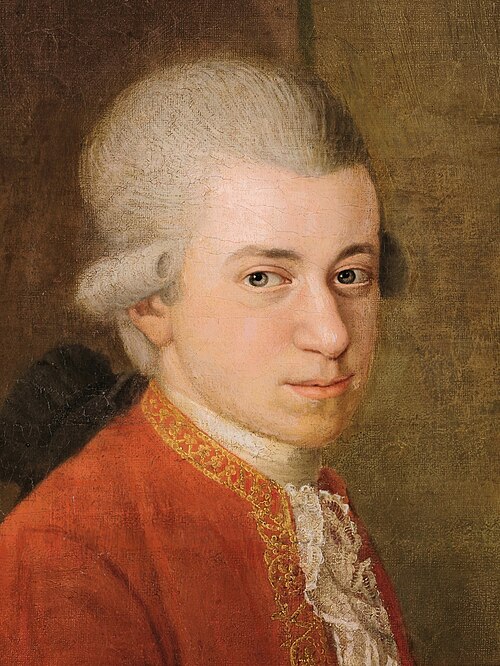
Mozart’s personality strongly aligns with the ENFP type, driven by Extraverted Intuition (Ne) as his dominant function. This is evident in his boundless creativity, his ability to generate and connect a vast array of musical ideas with incredible speed, and his constant pursuit of novel forms and expressions. He composed whole symphonies in his mind before writing them down, a testament to his intuitive, big-picture thinking. His life was a whirlwind of new projects, social engagements, and spontaneous inspiration, reflecting the Ne-driven desire for exploration and possibility.
His auxiliary function, Introverted Feeling (Fi), provided the internal emotional compass and authenticity that fueled his work. Mozart’s music is deeply expressive of human emotion, from the profound grief of his Requiem to the witty characterizations in his operas. This Fi also manifested in his personal defiance of aristocratic patronage; he valued his artistic freedom and personal integrity, famously clashing with Archbishop Colloredo. His decisions were often guided by his personal values and passions rather than external pragmatism.
The tertiary function, Extraverted Thinking (Te), emerged in his practical ability to organize and execute his prolific output, manage performances, and teach students. However, it was often underdeveloped in his personal affairs, leading to notorious financial mismanagement. His inferior function, Introverted Sensing (Si), represents his area of greatest weakness: a disregard for tradition, routine, and practical stability. He struggled with authority, was impulsive with money, and failed to learn from past financial mistakes, living perpetually in the present moment of creative possibility.