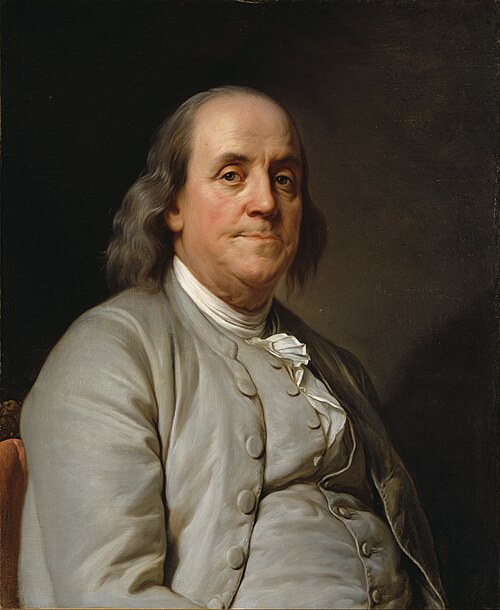
Benjamin Franklin is a quintessential ENTP, driven by a dominant Extroverted Intuition (Ne). This function is evident in his boundless curiosity and his ability to generate a vast array of ideas, connecting disparate fields like science, politics, and civic life. He thrived on exploring possibilities, whether theorizing about electricity, designing new inventions like the lightning rod, or conceptualizing novel political unions. His mind was a constant brainstorming session, seeking to improve and innovate upon every system he encountered.
His auxiliary Introverted Thinking (Ti) provided the internal logical framework to analyze and refine his Ne-generated ideas. Franklin was not a pure dreamer; he was a pragmatic problem-solver. He applied rigorous, reason-based analysis to his experiments, his writings (like ‘Poor Richard’s Almanack’), and his political arguments. This Ti-driven pragmatism is seen in his famous focus on utility and virtue as tools for personal and societal success. His tertiary Extroverted Feeling (Fe) made him a skilled diplomat and social architect. He understood group dynamics and used charm, wit, and a focus on communal benefit to build alliances, from the Junto club to the French court, always aiming to persuade and harmonize for a practical outcome.
His inferior Introverted Sensing (Si) manifests in his occasional battles with tradition and his structured, almost compulsive, attempts at self-improvement (his 13 virtues project) as a way to impose order on a naturally spontaneous mind. While he respected proven methods, he was always willing to challenge convention if a better way presented itself. His growth involved integrating Si’s lessons from past experience without letting it stifle his innovative spirit, ultimately allowing him to help build a new nation based on both enlightened ideas and practical governance.