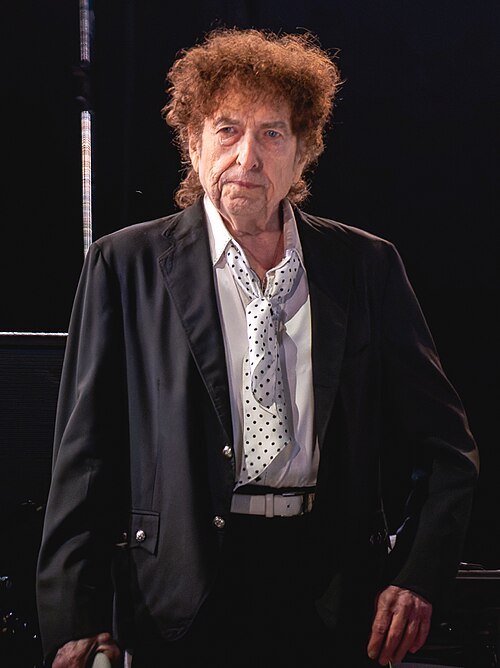
Robert Allen Zimmerman (Bob Dylan) - INFP Personality Type

Robert Allen Zimmerman (Bob Dylan)

INFP - Mediator

Category

Music

Nationality

United States of America

Occupation

Singer-Songwriter, Musician, Author, Poet

About Robert Allen Zimmerman (Bob Dylan)

Bob Dylan is an iconic American singer-songwriter, author, and visual artist, widely regarded as one of the most influential figures in 20th-century popular music and culture. He is known for his profound, poetic lyrics that addressed social, political, and personal themes, and for his distinctive vocal delivery. His career, spanning over six decades, has significantly shaped folk and rock music, earning him the Nobel Prize in Literature in 2016.

Personality Profile: INFP

Confidence: 85%

Personality Analysis

Bob Dylan exemplifies the INFP personality type, driven by a dominant Introverted Feeling (Fi). His entire career is a testament to a fierce, internalized value system that prioritizes authenticity, personal truth, and artistic integrity above all else. This Fi core explains his notorious resistance to being labeled a ‘spokesman’ for any movement, as seen when he rejected the folk-protest mantle in the mid-1960s. His decisions, from going electric to exploring gospel music, were guided by an inner moral and artistic compass, often appearing inscrutable or contrarian to the outside world but deeply consistent with his evolving internal narrative. His auxiliary Extraverted Intuition (Ne) fuels his visionary and exploratory creativity. Ne manifests in his ability to synthesize disparate influences—from folk ballads and Beat poetry to biblical themes and surreal imagery—into groundbreaking works. This function drives his constant reinvention and refusal to be pinned down to a single genre or style. He thrives on possibilities, new perspectives, and symbolic connections, which is evident in the rich, allusive tapestry of his lyrics. His tertiary Introverted Sensing (Si) provides a grounding in tradition and personal history, allowing him to draw deeply from the well of American folk and blues music, which he studied and internalized early in his career. However, his inferior Extraverted Thinking (Te) reveals itself in areas of growth and stress. While capable of shrewd career moves and demonstrating a formidable work ethic, his relationship with the external world of logic, systems, and public expectation is often strained. His notorious evasiveness in interviews, chaotic management in the 1970s (‘Rolling Thunder Revue’), and sometimes brusque dismissal of critics can be seen as an underdeveloped or defensive use of Te, struggling to impose external order on a world that conflicts with his Fi-Ne vision.

Supporting Evidence

His rejection of the folk-protest label after being hailed as its king, most famously at the 1965 Newport Folk Festival, showcases dominant Fi prioritizing personal artistic evolution over external demand. The dense, imagistic, and surreal lyrics of albums like ‘Highway 61 Revisited’ and ‘Blonde on Blonde’ are classic Ne, exploring a universe of symbolic connections and possibilities. His lifelong pattern of touring relentlessly (the ‘Never Ending Tour’) while maintaining an intensely private personal life reflects the INFP’s introverted core coupled with a channeled, almost ritualistic external expression (supported by Si). His evasive and often paradoxical responses in interviews, such as in ‘Don’t Look Back’ or his Nobel lecture, demonstrate a resistance to the logical framing of Te, preferring to let the work speak for itself or to operate on a more metaphorical plane.

Cognitive Function Stack

Confidence: 85%

The cognitive function stack represents how an individual processes information and makes decisions based on Jungian personality type theory.

Auxiliary Function: Ne

Extraverted Intuition - Seeing possibilities and connections in the external world.

Dominant Function: Fi

Introverted Feeling - Making decisions based on internal values and personal ethics.

Inferior Function: Te

Extraverted Thinking - Organizing and structuring the external world logically and efficiently.

Tertiary Function: Si

Introverted Sensing - Recalling detailed information and maintaining traditions.

Enneagram Personality Profile:

Confidence: 85%

4w5

Big Five Personality Traits

Confidence: 85%

The Big Five personality traits represent the five broad dimensions of personality that are commonly used to describe human personality.

Openness 0%
Conscientiousness 0%
Extraversion 0%
Agreeableness 0%
Neuroticism 0%