Donald J. Darko - INFP Personality Type

Donald J. Darko

INFP - Mediator

Category

Movie

Nationality

American

Occupation

High School Student

About Donald J. Darko

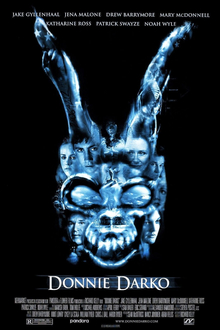
Donnie Darko is a troubled and intelligent teenager who begins experiencing visions of a sinister, prophetic rabbit named Frank. He is the protagonist of the 2001 cult film *Donnie Darko*, known for navigating a complex reality involving time travel, fate, and existential dread while grappling with mental illness.

Personality Profile: INFP

Confidence: 85%

Personality Analysis

Donnie Darko is a quintessential INFP. His dominant Introverted Feeling (Fi) is the core of his identity, driving his intense, personal value system. He is not merely rebellious; he is morally outraged by hypocrisy and injustice, as seen in his contempt for the self-help guru Jim Cunningham. His decisions are guided by this deep, internal emotional and ethical compass, often putting him at odds with his environment. He feels emotions profoundly and privately, struggling with existential despair, love for Gretchen, and a sense of being fundamentally different. His auxiliary Extraverted Intuition (Ne) manifests in his fascination with theoretical possibilities like time travel and the tangent universe. He connects disparate ideas—the philosophy of time travel, the corruption of his community, his own hallucinations—into a grand, if terrifying, narrative. This function fuels his imaginative exploration of ‘what if’ scenarios, making him receptive to the bizarre reality Frank presents. However, it can also lead to paranoia and a feeling of being overwhelmed by chaotic potentialities. His tertiary Introverted Sensing (Si) is less developed, often appearing as a haunting attachment to past memories and a sense of nostalgia for a perceived innocence. His inferior Extraverted Thinking (Te) emerges in bursts of harsh, critical logic aimed at the world’s absurdities (e.g., deconstructing “The Destructors”), but it is unstable. Under extreme stress, it can manifest as impulsive, destructive actions (flooding the school, burning Cunningham’s house) or a driven, almost fatalistic commitment to a logical conclusion to save the timeline, which is his ultimate Te-driven sacrificial act.

Supporting Evidence

His Fi is evident when he passionately argues with his teachers about Graham Greene’s story, defending the complexity of human motivation against simplistic moralism. His Ne is displayed in his immediate and deep engagement with Roberta Sparrow’s book The Philosophy of Time Travel, which he uses to framework his bizarre experiences. His intense, private emotional world (Fi) is clear in his therapy sessions, where he articulates loneliness and a fear of dying alone. His impulsive burning of Jim Cunningham’s house after exposing him is a stressed, inferior Te outburst, a direct, destructive action against a symbol of corruption he morally despises. Finally, his sacrificial choice at the film’s end, to lie in bed and accept death to reset the timeline, is the ultimate Fi-driven act, aligning his profound personal sense of love and responsibility with a logical (Te) necessity.

Cognitive Function Stack

Confidence: 85%

The cognitive function stack represents how an individual processes information and makes decisions based on Jungian personality type theory.

Auxiliary Function: Ne

Extraverted Intuition - Seeing possibilities and connections in the external world.

Dominant Function: Fi

Introverted Feeling - Making decisions based on internal values and personal ethics.

Inferior Function: Te

Extraverted Thinking - Organizing and structuring the external world logically and efficiently.

Tertiary Function: Si

Introverted Sensing - Recalling detailed information and maintaining traditions.

Enneagram Personality Profile:

Confidence: 85%

4w5

Big Five Personality Traits

Confidence: 85%

The Big Five personality traits represent the five broad dimensions of personality that are commonly used to describe human personality.

Openness 0%
Conscientiousness 0%
Extraversion 0%
Agreeableness 0%
Neuroticism 0%