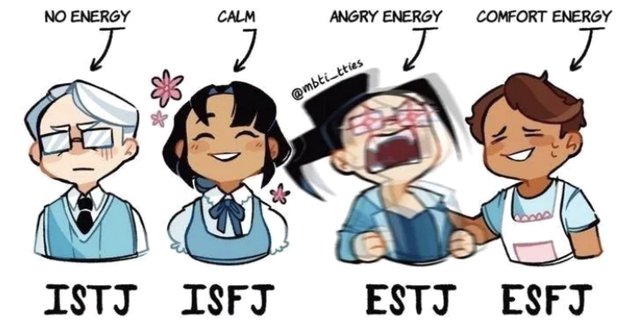
Virginia Marie "Ginni" Rometty - ESTJ Personality Type

Virginia Marie "Ginni" Rometty

ESTJ - Executive

Category

Business

Nationality

American

Occupation

Former Chair, President, and CEO of IBM; Business Executive

About Virginia Marie "Ginni" Rometty

Ginni Rometty is an American business executive who served as the Chair, President, and CEO of IBM from 2012 to 2020. She was the first woman to lead the technology giant and is known for steering IBM's strategic pivot towards hybrid cloud and artificial intelligence, including the landmark acquisition of Red Hat.

Personality Profile: ESTJ

Confidence: 85%

Personality Analysis

Ginni Rometty exemplifies the ESTJ (The Executive) personality type, driven by a dominant Extraverted Thinking (Te) function. Her leadership was defined by a pragmatic, results-oriented focus, prioritizing logical efficiency, clear structure, and decisive action to achieve corporate objectives. She is known for her direct communication and a commanding presence that instills discipline and drives execution, hallmarks of a strong Te user. Her decision-making style heavily leveraged data, established business metrics, and a methodical approach to strategy, aiming to systematize IBM’s transformation.

Her auxiliary function, Introverted Sensing (Si), provided a foundation of respect for IBM’s legacy, history, and proven processes. This function manifested in her emphasis on core company values, operational discipline, and a strategic approach that often involved modernizing and redirecting existing institutional strengths rather than discarding them entirely. The Si-Te combination fueled her famous ‘run to the hard problems’ philosophy, applying disciplined effort to tangible, complex challenges with a sense of institutional responsibility.

Interpersonally, as an ESTJ with an 8w9 Enneagram, Rometty projected authority, resilience, and a protective stance towards her company’s interests. She could be formidable and direct, with less emphasis on consensus-building than on decisive direction-setting. Her tertiary Ne allowed for strategic foresight into trends like AI and cloud, though this exploration was typically framed within a practical, business-outcome context. The inferior Introverted Feeling (Fi) can appear as a private sense of conviction and loyalty, occasionally surfacing in public reflections on purpose and belief in IBM’s potential, but personal sentiment was generally subordinate to the logical demands of the business.

Growth areas for an ESTJ like Rometty often involve further integrating their inferior Fi, which can lead to a greater emphasis on individual employee morale and consensus in change management, and more fully engaging auxiliary Ne to explore disruptive, ‘blue ocean’ strategies beyond the refinement of existing models. Her tenure showcased the strengths of the type—steering a massive organization through a necessary pivot—while also facing the challenges of transforming a legacy culture in a rapidly evolving industry.


Supporting Evidence

Her decisive leadership in IBM’s $34 billion acquisition of Red Hat was a monumental, data-driven bet to accelerate cloud growth, demonstrating dominant Te strategic execution. She institutionalized the mantra ‘run to the hard problems,’ reflecting Te-Si’s focus on disciplined tackling of complex, tangible challenges. Rometty consistently emphasized operational discipline and financial metrics (e.g., roadmaps for revenue growth in strategic imperatives), showcasing her reliance on Te structure and Si-based planning. Her direct and authoritative communication style, often described as ‘no-nonsense,’ is classic ESTJ Te in interpersonal dynamics. Furthermore, her long career at IBM before becoming CEO and her focus on the company’s core values and legacy during its transformation highlight the influence of auxiliary Si, which respects tradition and established systems.

Cognitive Function Stack

Confidence: 85%

The cognitive function stack represents how an individual processes information and makes decisions based on Jungian personality type theory.

Auxiliary Function: Si

Introverted Sensing - Recalling detailed information and maintaining traditions.

Dominant Function: Te

Extraverted Thinking - Organizing and structuring the external world logically and efficiently.

Inferior Function: Fi

Introverted Feeling - Making decisions based on internal values and personal ethics.

Tertiary Function: Ne

Extraverted Intuition - Seeing possibilities and connections in the external world.

Enneagram Personality Profile:

Confidence: 85%

8w9

Big Five Personality Traits

Confidence: 85%

The Big Five personality traits represent the five broad dimensions of personality that are commonly used to describe human personality.

Openness 0%
Conscientiousness 0%
Extraversion 0%
Agreeableness 0%
Neuroticism 0%

Similar ESTJ Characters

Explore other characters with similar personality traits