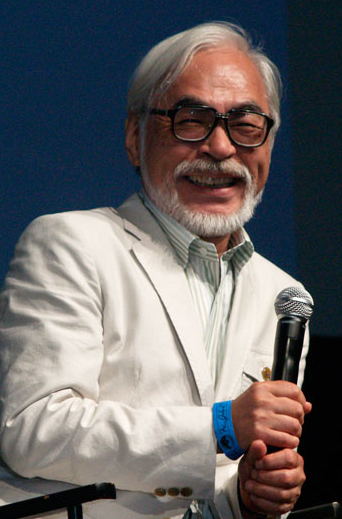
Hayao Miyazaki exemplifies the INFP personality type, driven by a strong internal value system (Dominant Introverted Feeling - Fi). His life’s work is a manifestation of his deeply held ideals about humanity’s relationship with nature, the innocence of childhood, and the tragedy of war. He is not motivated by commercial trends but by a personal, often moral, need to express his unique vision and critique of the world. His decision-making is guided by this inner compass, leading to famously uncompromising standards and a perfectionism that can frustrate colleagues.
His creative process is fueled by his auxiliary function, Extraverted Intuition (Ne). This is seen in his boundless imagination, his ability to weave complex, fantastical worlds, and his tendency to explore countless possibilities in storyboarding and narrative development. His films are rich with symbolic meaning and layered interpretations. However, his Ne is always filtered through and anchored by his core Fi values, ensuring his fantastical creations serve a deeper philosophical or emotional purpose.
In interpersonal dynamics, Miyazaki displays classic INFP tendencies: he is intensely private, often appearing gruff, reclusive, or melancholic. He is deeply sensitive, which can manifest as frustration with a world that fails to live up to his ideals. His tertiary function, Introverted Sensing (Si), provides a connection to personal and cultural memory, evident in his nostalgic depictions of pastoral Japan, detailed recreations of historical aircraft, and incorporation of Shinto-inspired spirituality. His inferior function, Extraverted Thinking (Te), emerges under stress as a drive for control and efficiency in his studio, often clashing with his otherwise more intuitive and values-driven approach. This tension between his idealistic vision and the practical demands of filmmaking is a central theme in his career.