Iago - ENTP Personality Type

Iago

ENTP - Debater

Category

Literature

Nationality

Venetian (Italian)

Occupation

Ancient (ensign/standard-bearer) in the Venetian military

About Iago

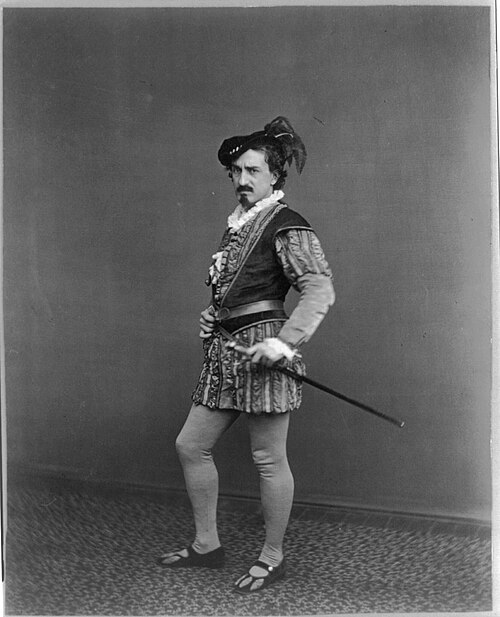
Iago is the primary antagonist in William Shakespeare's tragedy Othello. He is a cunning and manipulative ensign in the Venetian army who orchestrates the downfall of his general, Othello, by exploiting Othello's jealousy and insecurities. He is infamous for his Machiavellian villainy, deceptive nature, and his stated motivation of a perceived slight, encapsulated in his line, 'I hate the Moor.'

Personality Profile: ENTP

Confidence: 85%

Personality Analysis

Iago is a classic and malevolent example of the ENTP personality type. His dominant Extroverted Intuition (Ne) is on constant display as he generates a web of possibilities, connections, and schemes. He sees the potential for chaos in every relationship and object—Desdemona’s handkerchief, Cassio’s courtesy, Othello’s trust—and weaves them into a grand, destructive narrative. His mind operates like a chess master, anticipating moves several steps ahead and adapting his plan fluidly as new opportunities arise, such as when Cassio is disgraced or Roderigo becomes inconvenient.

His auxiliary Introverted Thinking (Ti) provides the cold, internal logic for his schemes. He is not driven by raw passion but by a twisted, rationalized sense of injustice and a desire to prove his intellectual mastery over others. His soliloquies reveal this internal logic engine at work, justifying his actions with a detached, analytical cruelty. The tertiary Extroverted Feeling (Fe) is weaponized; he expertly reads the emotional states of Othello, Desdemona, Cassio, and Roderigo, then manipulates those feelings with false camaraderie, feigned concern, and staged performances. He wears the mask of ‘honest Iago,’ a persona crafted to be likable and trustworthy, making his manipulations all the more effective.

His inferior Introverted Sensing (Si) manifests in his obsessive grudge over being passed over for promotion and his hinted-at, possibly fabricated, suspicion that Othello has slept with his wife, Emilia. These past grievances fester and fuel his entire campaign of revenge, showing a dysfunctional relationship with past slights. As an 8w7 Enneagram, his core fear is of being controlled or harmed, which he preempts by exerting extreme control over everyone in his orbit. The 7 wing adds a restless, almost playful energy to his villainy; he delights in the intellectual game and the chaos itself, famously stating, ‘Divinity of hell! When devils will the blackest sins put on, They do suggest at first with heavenly shows.’ His growth area—utterly unreached in the play—would involve channeling his formidable Ne and Ti into constructive, rather than purely destructive, systems and using his Fe for genuine connection instead of manipulation.

Supporting Evidence

His entire plot is evidence of dominant Ne and auxiliary Ti: he concocts a complex plan involving multiple characters (Cassio’s drunkenness, the handkerchief, manipulating Roderigo) and adjusts it logically in real time. His skillful manipulation of Othello’s jealousy demonstrates his use of Fe; he reads Othello’s insecurities perfectly and presents himself as a loyal friend only looking out for Othello’s honor (‘O, beware, my lord, of jealousy; It is the green-eyed monster which doth mock The meat it feeds on’). His stated motivations—being overlooked for promotion and suspecting Othello with Emilia—show the influence of inferior Si, holding onto past grievances. Finally, his charismatic ability to make nearly every character trust him, from Othello to his own wife, is a testament to his command of Fe, making his ENTP typing, with its focus on persuasive idea-generation, clearly evident.

Cognitive Function Stack

Confidence: 85%

The cognitive function stack represents how an individual processes information and makes decisions based on Jungian personality type theory.

Auxiliary Function: Ti

Introverted Thinking - Analyzing and categorizing information logically and precisely.

Dominant Function: Ne

Extraverted Intuition - Seeing possibilities and connections in the external world.

Inferior Function: Si

Introverted Sensing - Recalling detailed information and maintaining traditions.

Tertiary Function: Fe

Extraverted Feeling - Connecting with others and maintaining social harmony.

Enneagram Personality Profile:

Confidence: 85%

8w7

Big Five Personality Traits

Confidence: 85%

The Big Five personality traits represent the five broad dimensions of personality that are commonly used to describe human personality.

Openness 0%
Conscientiousness 0%
Extraversion 0%
Agreeableness 0%
Neuroticism 0%

Similar ENTP Characters

Explore other characters with similar personality traits