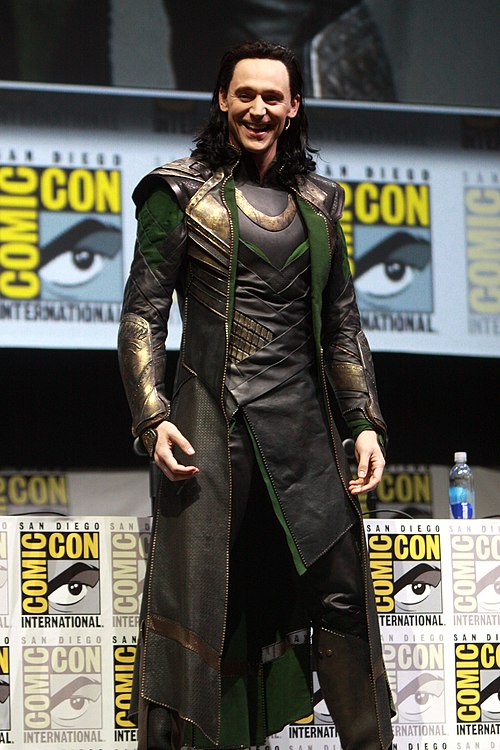
Loki is a quintessential ENTP, driven by a dominant Extroverted Intuition (Ne). This function manifests as his boundless creativity in generating schemes, seeing countless possibilities in any situation, and his love for chaos as a means to explore ‘what if’ scenarios. He thrives on the thrill of the game, constantly improvising and adapting his plans, as seen in his ever-shifting escapes and deceptions. His auxiliary Introverted Thinking (Ti) provides the internal logical framework for his mischief; his plans are not random but intricate puzzles designed to prove his intellectual superiority and deconstruct the established order (like Asgard’s monarchy). He values cleverness for its own sake.
His tertiary Extroverted Feeling (Fe) is a source of both his charm and his deep conflict. Loki is acutely aware of social dynamics and uses his charisma and silver tongue to manipulate others. However, this function also craves connection and validation, which clashes with his Ti’s detached analysis. His entire arc stems from a wounded Fe—the feeling of not belonging and the desperate need for love and recognition from his family and subjects. This often leads him to make dramatic, emotionally-charged plays for a throne (a symbol of worth) rather than purely logical power grabs.
His inferior Introverted Sensing (Si) represents his struggle with the past and tradition. Loki rejects the static history and rigid legacy of Asgard, yet he is paradoxically haunted by it. His insecurity is rooted in the traumatic discovery of his origins (a painful past memory—Si). His growth, particularly in his self-titled series, involves grappling with this inferior function: confronting his past failures, understanding patterns in his behavior, and moving from a desire to rule a kingdom to a purpose in preserving the narrative of the multiverse—a more mature integration of his need for significance with a stable sense of identity.