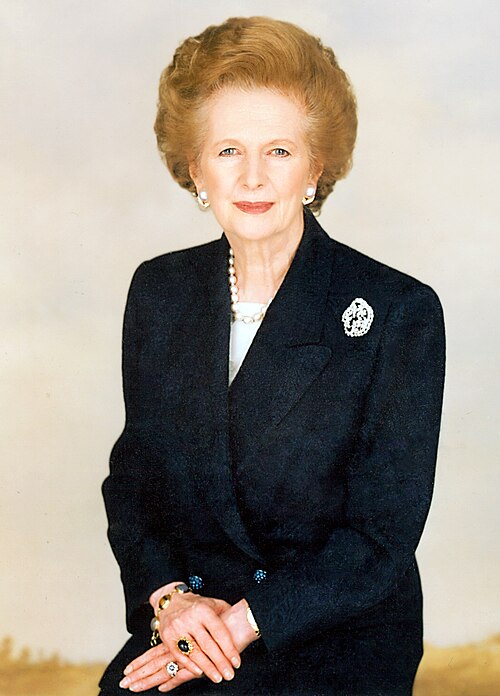
Margaret Thatcher is a quintessential ESTJ (The Executive), driven by a dominant Extraverted Thinking (Te) function. This function manifests in her decisive, logical, and efficiency-focused leadership. She prized objective facts, clear results, and structured hierarchy, famously stating ‘the lady’s not for turning.’ Her decision-making was swift and firm, based on a pragmatic assessment of what she deemed necessary to achieve her goals, such as curbing inflation or winning the Falklands War. She ran her cabinet with a top-down, managerial style, expecting her ministers to implement policy rather than debate philosophy.
Her auxiliary function, Introverted Sensing (Si), provided a strong foundation in tradition, precedent, and personal experience. She frequently referenced the values of Victorian Britain—thrift, hard work, national pride—and saw her policies as a restoration of these principles. This Si-Te combination made her a formidable defender of established order (as she defined it) and a relentless implementer of systematic change based on a clear, historically-informed blueprint. She was less interested in abstract theories than in practical applications that aligned with her core beliefs about society.
Interpersonally, her inferior Introverted Feeling (Fi) often presented as a vulnerability masked by Te-bluntness. While she held deep personal convictions, she struggled to express empathy or understand opposing emotional perspectives, famously declaring ‘there is no such thing as society.’ This sometimes led to a perception of coldness and an inability to build consensus, contributing to her eventual political isolation. Her tertiary Ne (Extraverted Intuition) was underdeveloped but emerged in her ability to foresee the long-term consequences of her economic reforms and to adopt a grand strategic vision in foreign policy, aligning firmly with the US against the Soviet Union.
Growth areas for an ESTJ like Thatcher involve integrating the opposing function, Introverted Feeling (Fi), to better understand the human impact of policies and to value internal harmony alongside external efficiency. Developing her tertiary Ne could have allowed for more flexibility and consideration of alternative futures beyond her own vision. Her legacy is defined by the immense strength of her Te-Si axis, which drove transformative change, but also by the limitations of that same axis when confronted with complex social and emotional landscapes.