Naomi Osaka - INFP Personality Type

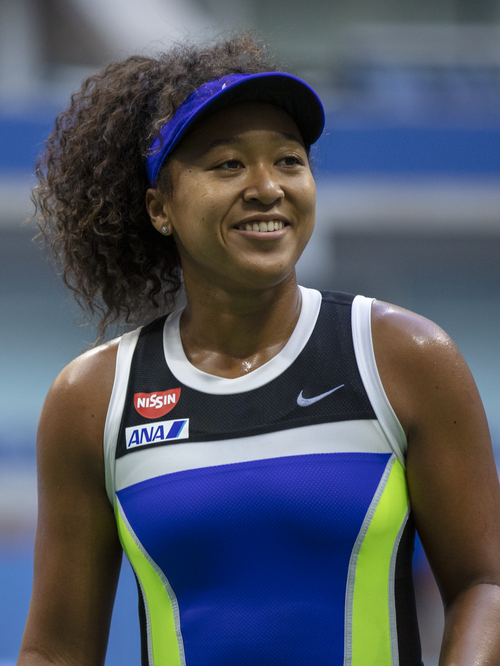
Naomi Osaka

INFP - Mediator

Category

Sports

Nationality

Japan

Occupation

Professional Tennis Player

About Naomi Osaka

Naomi Osaka is a world-renowned professional tennis player, a four-time Grand Slam singles champion, and a former world No. 1. She is celebrated not only for her powerful baseline game but also for her prominent advocacy for mental health awareness and social justice, making her a transformative figure in modern sports.

Personality Profile: INFP

Confidence: 85%

Personality Analysis

Naomi Osaka’s personality strongly aligns with the INFP type, characterized by a dominant Introverted Feeling (Fi) function. This is evident in her consistent reliance on her internal value system to guide her actions, from her social justice advocacy to her candid discussions about mental health. She is not driven by external validation or tradition but by a personal sense of right and wrong. Her decision-making is deeply introspective, often requiring time alone to process and align her choices with her authentic self, which can manifest as a quiet, reserved public persona that contrasts with her explosive power on the court.

Her auxiliary Extraverted Intuition (Ne) allows her to see possibilities beyond the immediate, envisioning a better world and using her platform creatively to promote change. However, under the immense stress of public scrutiny and athletic pressure, her inferior Extraverted Thinking (Te) can emerge in a more strained, black-and-white manner. This was visible in her decisive, sometimes abrupt, withdrawals from tournaments to protect her well-being, a logical but externally forceful application of her internal needs. The tension between her deep Fi values and the Te demands of the professional sports world is a central dynamic in her public narrative.

As an Enneagram 9w1, her core desire for inner peace and harmony (9) is tempered by a 1 wing’s sense of principled integrity. This combination fuels her advocacy—she seeks harmony through justice and reform. Her growth lies in further integrating her inferior Te, learning to structure her external world in a way that sustainably supports her Fi values without leading to burnout. Embracing her voice not just as an emotional truth but as a strategically impactful tool represents a key developmental path, allowing her to channel her idealism into lasting systemic influence.

Supporting Evidence

Her decision to wear masks bearing the names of Black victims of police violence during the 2020 US Open demonstrates dominant Fi, using her platform for a cause aligned with her personal values. Her public withdrawal from the French Open in 2021, citing mental health struggles and refusing to participate in mandatory press conferences, shows a prioritization of internal well-being (Fi) over external expectations and a strained use of inferior Te to enforce a boundary. Her thoughtful, often introspective and vulnerable essays and social media posts reveal her introspective processing style. On-court, her intense, focused, and disciplined play style, often described as ‘locked-in,’ reflects the INFP’s capacity for deep concentration on a valued endeavor, while her post-match interviews frequently display a soft-spoken, humble, and internally-referenced demeanor.

Cognitive Function Stack

Confidence: 85%

The cognitive function stack represents how an individual processes information and makes decisions based on Jungian personality type theory.

Auxiliary Function: Ne

Extraverted Intuition - Seeing possibilities and connections in the external world.

Dominant Function: Fi

Introverted Feeling - Making decisions based on internal values and personal ethics.

Inferior Function: Te

Extraverted Thinking - Organizing and structuring the external world logically and efficiently.

Tertiary Function: Si

Introverted Sensing - Recalling detailed information and maintaining traditions.

Enneagram Personality Profile:

Confidence: 85%

9w1

Big Five Personality Traits

Confidence: 85%

The Big Five personality traits represent the five broad dimensions of personality that are commonly used to describe human personality.

Openness 0%
Conscientiousness 0%
Extraversion 0%
Agreeableness 0%
Neuroticism 0%