Nikolai Vasilievich Gogol - INFP Personality Type

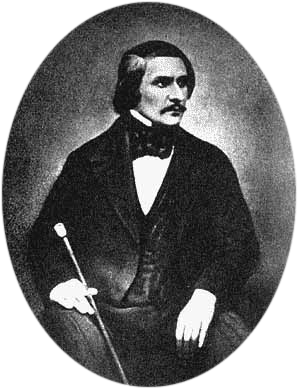
Nikolai Vasilievich Gogol

INFP - Mediator

Category

Literature

Nationality

Russian

Occupation

Writer, Novelist, Playwright

About Nikolai Vasilievich Gogol

Nikolai Gogol was a 19th-century Russian novelist, short story writer, and dramatist. He is considered one of the founding figures of Russian literary realism, though his work is deeply infused with satire, grotesque absurdity, and elements of the fantastic. He is best known for his novel 'Dead Souls' and his play 'The Government Inspector,' which masterfully critique the corruption and social stagnation of Imperial Russia.

Personality Profile: INFP

Confidence: 85%

Personality Analysis

Nikolai Gogol exemplifies the INFP type, driven by a dominant Introverted Feeling (Fi). His work is a profound expression of a personal, often tormented, moral universe. He held a deep, almost mystical, ideal for Russia and humanity, which clashed painfully with the pettiness and corruption he observed (Fi-Si). This internal conflict fueled his creative fire but also his intense personal suffering. His auxiliary Extraverted Intuition (Ne) is evident in his wildly imaginative plots, his ability to generate a cascade of absurd and grotesque characters (like Chichikov or Khlestakov), and his penchant for surreal, symbolic imagery that points to deeper truths. Gogol’s work is not a detached, systematic critique (Te), but a felt, intuitive exploration of a society’s soul. His tertiary Introverted Sensing (Si) contributed to his vivid, almost hallucinatory, recall of sensory details from his Ukrainian childhood and provincial life, which he then distorted through his Ne. His inferior Extraverted Thinking (Te) manifested as a lifelong struggle with structure, deadlines, and practical life. His most famous project, ‘Dead Souls,’ was envisioned as a grand, Dantean trilogy to morally regenerate Russia, but he could never systematize this vision into a completed work. His later years were marked by an agonizing attempt to impose a rigid, dogmatic order (Te) on his life and art, leading to the infamous burning of the second part of ‘Dead Souls,’ a desperate act of perfectionism born of a dysfunctional inferior function.

Supporting Evidence

His masterpiece ‘Dead Souls’ is a quintessential Fi-Ne creation: a journey through a gallery of grotesque, symbolically named landowners, reflecting Gogol’s deep internal critique of spiritual emptiness, framed by an absurd premise. His play ‘The Government Inspector’ uses farcical comedy (Ne) to expose universal human vices like vanity and corruption, driven by his moral sensibility (Fi). His personal life was characterized by reclusiveness, intense friendships that often ended in estrangement, and a profound religious anxiety, showing classic INFP interpersonal patterns. The defining tragedy of his career—the repeated writing and destruction of the sequel to ‘Dead Souls’—demonstrates the clash between his high internal ideals (Fi) and his inability to execute a systematic plan (inferior Te). His final act, burning his manuscripts on his deathbed, was the ultimate expression of a perfectionistic Fi-Si loop, rejecting a world that did not meet his inner standards.

Cognitive Function Stack

Confidence: 85%

The cognitive function stack represents how an individual processes information and makes decisions based on Jungian personality type theory.

Auxiliary Function: Ne

Extraverted Intuition - Seeing possibilities and connections in the external world.

Dominant Function: Fi

Introverted Feeling - Making decisions based on internal values and personal ethics.

Inferior Function: Te

Extraverted Thinking - Organizing and structuring the external world logically and efficiently.

Tertiary Function: Si

Introverted Sensing - Recalling detailed information and maintaining traditions.

Enneagram Personality Profile:

Confidence: 85%

4w5

Big Five Personality Traits

Confidence: 85%

The Big Five personality traits represent the five broad dimensions of personality that are commonly used to describe human personality.

Openness 0%
Conscientiousness 0%
Extraversion 0%
Agreeableness 0%
Neuroticism 0%