Rani Lakshmibai - ESTJ Personality Type

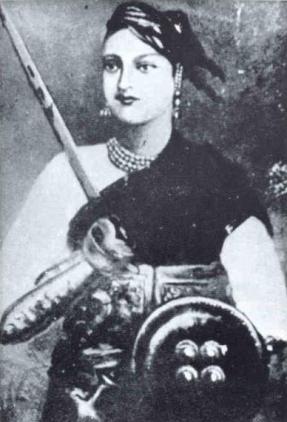
Rani Lakshmibai

ESTJ - Executive

Category

History

Nationality

Indian

Occupation

Queen, Military Leader

About Rani Lakshmibai

Rani Lakshmibai was the Queen of the Maratha-ruled princely state of Jhansi in North India. She is a central figure of the Indian Rebellion of 1857 and is renowned as a symbol of resistance against British colonial rule. She is celebrated for her exceptional military leadership, strategic acumen, and valiant death on the battlefield, becoming an enduring national heroine.

Personality Profile: ESTJ

Confidence: 85%

Personality Analysis

Rani Lakshmibai’s personality strongly aligns with the ESTJ type, dominated by Extraverted Thinking (Te). This function manifests in her pragmatic, decisive, and organized leadership. She was a masterful executor who assessed situations with clear logic, mobilized resources efficiently, and issued direct commands. Her leadership during the siege and defense of Jhansi was not driven by abstract ideology alone, but by a concrete plan of action to protect her people and her sovereign right (a core Te principle of external order and justice). She valued competence, structure, and tangible results, swiftly organizing her forces and fortifications in response to the British threat. Her auxiliary function, Introverted Sensing (Si), provided a strong sense of duty, tradition, and precedent. She was fiercely protective of her adopted son’s right to the throne (the doctrine of lapse being an affront to established tradition) and saw herself as the guardian of Jhansi’s legacy. This Si-Te combination fueled her resolve; her duty was not a vague ideal but a concrete responsibility tied to history and law. Her personal upbringing, which included martial training unusual for women of her time, became a lived experience (Si) she effectively applied (Te) in warfare. Interpersonally, as an ESTJ and Enneagram 8w9, she was a commanding, protective, and resolute figure. She inspired loyalty through action and shared sacrifice, not just words. The ‘9’ wing softened the classic 8’s confrontational edge towards her people, showing a capacity to unite disparate groups for a common defense, though she remained unyielding against external enemies. Her inferior Introverted Feeling (Fi) is seen in the deeply personal, almost sacred value she placed on her role as Rani and mother to her people. This profound internal value system, though secondary to her action-oriented Te, was the unwavering core that made surrender impossible, ultimately leading to her heroic last stand. Potential growth areas for this functional stack would involve integrating a more developed Fi – a deeper exploration of internal emotions and values beyond duty. However, in the context of her life and the monumental crisis she faced, her ESTJ traits were precisely the tools needed for effective resistance. Her lesser-used Ne might be glimpsed in her adaptable tactics, such as the legendary escape from Jhansi Fort by jumping on horseback, demonstrating a sudden, innovative solution when conventional defense was no longer viable.

Supporting Evidence

Her decisive action upon the British annexation of Jhansi demonstrates Te-Si: she immediately began fortifying the city, raising a volunteer army, and securing alliances, turning a legal grievance into a practical military campaign. Her legendary horseback escape from the falling fort, tying her adopted son to her back, shows Te-Ne adaptability under extreme pressure, finding an unconventional solution. Her leadership in battle, personally leading cavalry charges at the defense of Jhansi and at Kotah-ki-Serai, exemplifies Te-Se direct engagement and leading by example. Her famous declaration, ‘Meri Jhansi nahi doongi’ (I will not give up my Jhansi), encapsulates the Si-driven sense of legacy and the Te-driven will to enforce that right. Finally, her refusal to flee even when defeat was imminent, choosing to fight to the death, reveals the deep Fi value she placed on honor and sovereignty, integrated into her dominant Te action.

Cognitive Function Stack

Confidence: 85%

The cognitive function stack represents how an individual processes information and makes decisions based on Jungian personality type theory.

Auxiliary Function: Si

Introverted Sensing - Recalling detailed information and maintaining traditions.

Dominant Function: Te

Extraverted Thinking - Organizing and structuring the external world logically and efficiently.

Inferior Function: Fi

Introverted Feeling - Making decisions based on internal values and personal ethics.

Tertiary Function: Ne

Extraverted Intuition - Seeing possibilities and connections in the external world.

Enneagram Personality Profile:

Confidence: 85%

8w9

Big Five Personality Traits

Confidence: 85%

The Big Five personality traits represent the five broad dimensions of personality that are commonly used to describe human personality.

Openness 0%
Conscientiousness 0%
Extraversion 0%
Agreeableness 0%
Neuroticism 0%

Similar ESTJ Characters

Explore other characters with similar personality traits