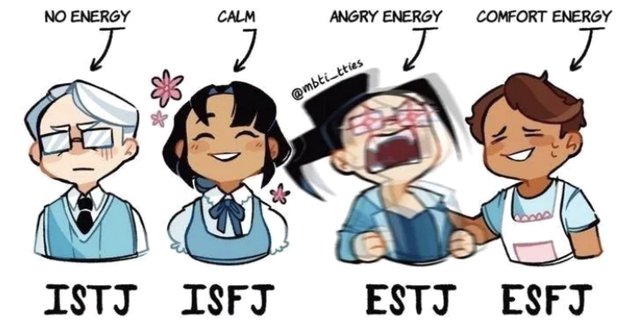
Ruth Handler’s personality is a quintessential example of the ESTJ (Extraverted, Sensing, Thinking, Judging) type, driven by a dominant Extraverted Thinking (Te) function. This manifests in her direct, results-oriented leadership style. She was a pragmatic visionary who identified market gaps—like the lack of adult-figured dolls for girls—and mobilized resources with decisive efficiency to fill them. Her decision-making was grounded in observable facts, market data, and logical outcomes, rather than abstract theories or sentiment. Te dominance made her a formidable executive, focused on structure, organization, and achieving tangible success for Mattel. Her auxiliary function, Introverted Sensing (Si), supported her Te by drawing on past experiences and established business practices to inform her strategies, though she was never bound by tradition when innovation was required. Her tertiary Extraverted Intuition (Ne) allowed her to spot novel opportunities, such as the potential of the Barbie concept, and connect disparate ideas into a commercially viable product. Her inferior Introverted Feeling (Fi) represents a growth area. Early in her career, she could be perceived as somewhat impersonal or overly aggressive in her pursuit of goals. Her later life, however, showed significant development of Fi through her deeply personal work with Nearly Me, channeling her own experience with breast cancer into a venture that combined her business acumen with a mission to help others, indicating a maturation toward integrating personal values with her formidable external achievements. Her interpersonal dynamics were characterized by a commanding presence. As an Enneagram 8w7, she was assertive, confident, and unafraid of confrontation, pushing back against male-dominated business norms and skeptical colleagues to bring her ideas to life. She built Mattel through sheer force of will, competitive drive, and a focus on scalable, systematic production and marketing.