Septimus Warren Smith - INFP Personality Type

Septimus Warren Smith

INFP - Mediator

Category

Literature

Nationality

British

Occupation

Former Soldier, Clerk

About Septimus Warren Smith

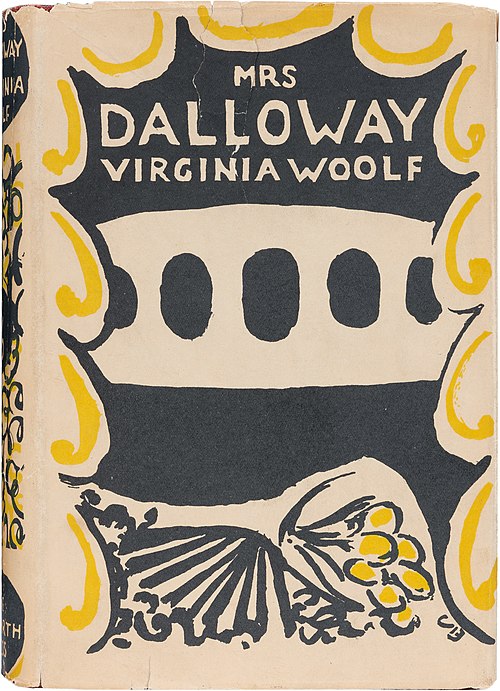
Septimus Warren Smith is a World War I veteran and a central character in Virginia Woolf's modernist novel 'Mrs. Dalloway'. He is known for his profound shell shock (PTSD) and his tragic, fragmented perception of reality, which stands in stark contrast to the novel's surface-level societal events. His story is a poignant critique of post-war society's failure to understand psychological trauma.

Personality Profile: INFP

Confidence: 85%

Personality Analysis

Septimus Warren Smith is a quintessential INFP, with dominant Introverted Feeling (Fi) and auxiliary Extraverted Intuition (Ne). His entire existence is governed by a deep, internal value system (Fi) focused on authenticity, humanity, and profound emotional connection. His trauma stems from his failure to feel—his numbness at his friend Evans’s death—which violates his core Fi principles, leading to overwhelming guilt and a fractured sense of self. His Fi is not oriented toward societal norms but toward a private, intense morality, making him feel utterly alienated from the post-war world that values stoicism and convention. His auxiliary Ne manifests in his hallucinatory, symbolic perception of the world. He does not simply see trees or clouds; he sees intricate patterns, messages, and profound truths within them (‘Fear no more,’ the rustling leaves whisper). This Ne, untethered from healthy coping mechanisms, runs in a negative loop with his Fi, generating terrifying and ecstatic visions that are his attempts to process his internal agony and find meaning. His inferior Extraverted Thinking (Te) is critically weak. He is incapable of organizing his external world, relying on his wife Rezia to manage practicalities. The authoritative, logical Te of doctors Holmes and Bradshaw represents his inferior function in its destructive, persecutory form; their insistence on ‘proportion’ and institutionalization is the antithesis of his inner world and ultimately destroys him. His tertiary Introverted Sensing (Si) is negatively engaged, trapping him in vivid, intrusive flashbacks of the war and his failure, reinforcing his despair rather than providing comfort from the past.

Supporting Evidence

His defining trauma—the inability to feel grief at his friend Evans’s death—highlights a catastrophic failure of his dominant Fi, leading to a core belief that he is morally dead. His communications are not logical but symbolic and poetic, as when he believes sparrows sing in Greek or that the world has condemned him for a ‘supreme crime,’ demonstrating Ne’s symbolic processing and Fi’s personal morality. His complete withdrawal from social interaction and his focus on internal visions of beauty and horror, like seeing his dead friend Evans in the park, show extreme introversion and a dominant inner world. His helplessness in the face of practical decisions and his dependence on Rezia, contrasted with his violent rejection of the doctors’ ‘logical’ solutions, showcase a crippling relationship with inferior Te. His final act, leaping to his death, is a tragic Fi decision to preserve the integrity of his inner self from the violation of institutional ‘proportion’ (Te), which he perceives as the ultimate evil.

Cognitive Function Stack

Confidence: 85%

The cognitive function stack represents how an individual processes information and makes decisions based on Jungian personality type theory.

Auxiliary Function: Ne

Extraverted Intuition - Seeing possibilities and connections in the external world.

Dominant Function: Fi

Introverted Feeling - Making decisions based on internal values and personal ethics.

Inferior Function: Te

Extraverted Thinking - Organizing and structuring the external world logically and efficiently.

Tertiary Function: Si

Introverted Sensing - Recalling detailed information and maintaining traditions.

Enneagram Personality Profile:

Confidence: 85%

4w5

Big Five Personality Traits

Confidence: 85%

The Big Five personality traits represent the five broad dimensions of personality that are commonly used to describe human personality.

Openness 0%
Conscientiousness 0%
Extraversion 0%
Agreeableness 0%
Neuroticism 0%