Sergey Mikhaylovich Brin - INTP Personality Type

Sergey Mikhaylovich Brin

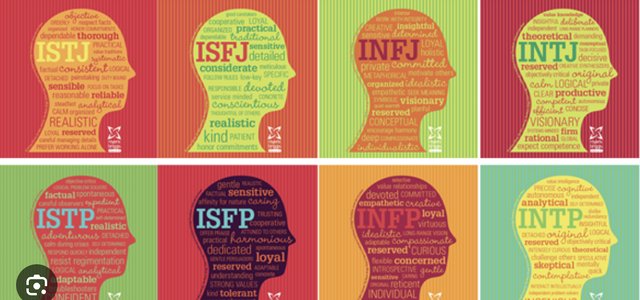
INTP - Logician

Category

Technology

Nationality

American (born in the Soviet Union)

Occupation

Computer Scientist, Entrepreneur, Co-founder of Google

About Sergey Mikhaylovich Brin

Sergey Brin is a computer scientist and entrepreneur who co-founded Google, the world's dominant search engine and technology conglomerate, with Larry Page. He played a pivotal role in developing Google's revolutionary PageRank algorithm and in building the company into a global leader in internet services, cloud computing, and ambitious 'moonshot' projects. He is known for his visionary approach to technology and his focus on solving large-scale, global problems through innovation.

Personality Profile: INTP

Confidence: 85%

Personality Analysis

Sergey Brin exemplifies the INTP personality type, driven by a dominant Introverted Thinking (Ti) function. His primary mode of operation is to build and refine complex internal models of how the world works. This is evident in his co-creation of the PageRank algorithm, a masterful logical system for ordering information. His decision-making is governed by internal consistency and logical integrity rather than external values or traditions, leading him to famously challenge established business and technical norms. Brin’s work style is quintessentially that of an architect, designing frameworks for understanding and manipulating data. His auxiliary function, Extraverted Intuition (Ne), fuels his expansive, future-oriented vision. He is not content with simply optimizing search; he constantly scans the horizon for new possibilities and disruptive connections, leading Google into fields like self-driving cars, augmented reality (Google Glass), and life sciences (Calico). This Ne-driven curiosity is a hallmark of his personality, pushing him to ask ‘what if’ on a grand scale. Interpersonally, Brin’s lower preference for Extraverted Feeling (Fe) manifests as a focus on the idea, not the person. In Google’s early days, he was known for his intense, sometimes socially blunt, intellectual debates, prioritizing the purity of the technical solution over group harmony. His growth area, typical for an INTP, involves integrating the inferior Fe—developing a greater conscious awareness of the social and emotional impact of his technological visions. His later philanthropic efforts and more measured public role suggest development in this area, balancing his logical systems with humanistic considerations.


Supporting Evidence

The development of the PageRank algorithm itself is a prime example of his dominant Ti—creating an elegant, logical system to solve the messy problem of web search. His famous motto, ‘Don’t be evil,’ reflects an internal ethical framework (Ti) applied to corporate conduct, rather than one derived from external social mores. His leadership in Google’s ‘moonshot’ factory, Google X (now X Development), showcases his auxiliary Ne, pursuing audacious projects like Project Loon (internet balloons) that connect disparate fields. His early, direct, and often challenging style in technical debates, sometimes described as dismissive of ideas he found illogical, illustrates his lower Fe preference. His significant shift towards philanthropy, particularly through the Brin Wojcicki Foundation and his focus on Parkinson’s disease research, indicates a maturing engagement with his inferior Fe, applying his analytical skills to deeply human problems.

Cognitive Function Stack

Confidence: 85%

The cognitive function stack represents how an individual processes information and makes decisions based on Jungian personality type theory.

Auxiliary Function: Ne

Extraverted Intuition - Seeing possibilities and connections in the external world.

Dominant Function: Ti

Introverted Thinking - Analyzing and categorizing information logically and precisely.

Inferior Function: Fe

Extraverted Feeling - Connecting with others and maintaining social harmony.

Tertiary Function: Si

Introverted Sensing - Recalling detailed information and maintaining traditions.

Enneagram Personality Profile:

Confidence: 85%

5w6

Big Five Personality Traits

Confidence: 85%

The Big Five personality traits represent the five broad dimensions of personality that are commonly used to describe human personality.

Openness 0%
Conscientiousness 0%
Extraversion 0%
Agreeableness 0%
Neuroticism 0%