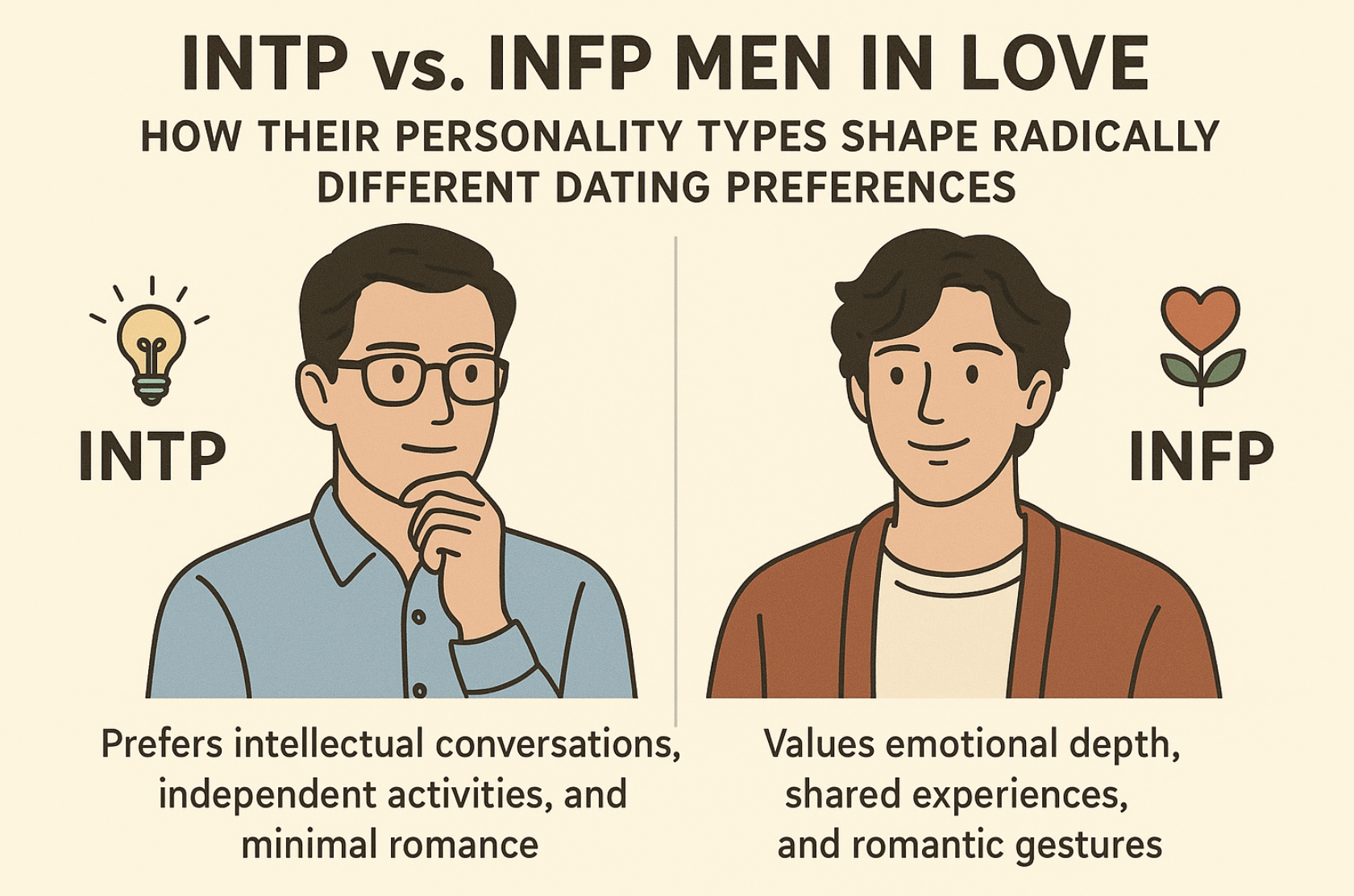
INTP vs. INFP Men in Love: How Their Personality Types Shape Radically Different Dating Preferences
INTP vs. INFP Men: How Their Personality Types Dictate Their Dating Choices
Understanding how personality types influence romantic preferences can offer profound insights into compatibility and Relationship Dynamics. Among the Myers-Briggs types, INTP (The Logician) and INFP (The Mediator) men exhibit strikingly different approaches to love, despite both being introverted, intuitive, and feeling-driven. While they share some traits—such as deep introspection and a preference for meaningful connections—their core motivations and partner selections diverge significantly.
This article explores the distinct dating tendencies of INTP and INFP men, analyzing how their cognitive functions shape their romantic ideals, power dynamics in relationships, and even their willingness to stay single.
1. INTP Men: The Analytical Seekers of Control and Comfort
INTPs, known for their logical and detached demeanor, approach relationships with a problem-solving mindset. Their dominant function, Introverted Thinking (Ti), drives them to seek partners who align with their internal frameworks—often favoring simplicity and predictability over emotional turbulence.
Key Dating Traits of INTP Men:
Preference for “Lower-Status” Partners: INTPs often gravitate toward partners they perceive as less dominant—younger individuals, students, or subordinates. This isn’t necessarily about manipulation but rather a desire for minimal relational friction. A partner who is agreeable and undemanding allows the INTP to maintain their independence without excessive emotional labor.
The “Soft and Manageable” Ideal: Many INTP men describe their ideal partner as someone gentle, easygoing, and intellectually stimulating without being confrontational. They appreciate partners who don’t disrupt their thought processes or demand constant emotional validation.
Comfort with Solitude: Unlike more socially driven types, INTPs are perfectly content staying single if they can’t find a partner who meets their low-maintenance criteria. They prioritize intellectual freedom over romantic attachment.
Why This Dynamic Works for Them:For INTPs, relationships are extensions of their need for mental harmony. A partner who doesn’t challenge their autonomy or demand excessive emotional engagement allows them to thrive without feeling stifled.
2. INFP Men: The Idealistic Seekers of Emotional Anchors
INFPs, in contrast, are guided by Introverted Feeling (Fi), which makes them deeply value authenticity, emotional depth, and moral alignment in relationships. Unlike INTPs, they don’t seek control—instead, they yearn for a partner who can provide stability and take charge in areas where they feel insecure.
Key Dating Traits of INFP Men:Attraction to “Strong” Partners: INFPs often pursue older or more assertive individuals—those who can “handle” life’s challenges. This stems from their tendency to avoid conflict and their subconscious desire for someone to compensate for their indecisiveness.
The “Responsible Protector” Ideal: An INFP man admires partners who are self-assured, capable, and willing to take the lead in difficult situations. They appreciate a partner who can “take the blame” or make tough decisions, as INFPs themselves often struggle with guilt and self-doubt.
Emotional Dependence vs. Independence: While INFPs crave deep emotional bonds, they also fear being overwhelmed. A partner who balances strength with sensitivity is their ideal. However, like INTPs, they may remain single if they can’t find someone who meets their emotional needs without being overbearing.
Why This Dynamic Works for Them:INFPs thrive in relationships where they feel emotionally supported yet not smothered. A partner who provides structure and reassurance allows them to express their creativity and idealism without the burden of constant decision-making.
3. Comparing INTP and INFP Men in Relationships
While both types may appear similar on the surface—both are introverted, intuitive, and prone to overthinking—their relational behaviors differ starkly:
| Aspect | INTP Men | INFP Men |
|---|---|---|
| Partner Preference | Younger, agreeable, low-conflict | Older, assertive, emotionally secure |
| Motivation | Intellectual compatibility, control | Emotional security, moral alignment |
| Dealbreakers | Neediness, emotional demands | Dominance without empathy |
| Singlehood | Comfortable if freedom is preserved | Content if no “right” partner exists |
4. Career Implications: How Their Romantic Preferences Reflect Work Styles
Interestingly, these dating tendencies mirror their professional behaviors:
INTPs in the Workplace: Prefer roles with minimal supervision, thrive in analytical fields (engineering, programming), and dislike hierarchical power struggles.
-
INFPs in the Workplace: Seek meaningful work, often in creative or helping professions (writing, counseling), and perform best with supportive leaders who provide direction.
Final Thoughts: Which Type Is More Compatible with You?
Understanding these differences can help potential partners navigate relationships with INTP or INFP men. If you value independence and intellectual exchange, an INTP may be a great match. If you’re a natural leader who enjoys emotional depth, an INFP could be ideal.
Ultimately, both types prioritize authenticity—just in different ways. Recognizing these patterns can lead to healthier, more fulfilling connections—or a better understanding of why staying single might be their best choice.
More Relationship & Type Resources
- 📊 Take the Free Personality Test — Discover your type in 5 minutes →
- ❤️ MBTI Compatibility Guide — How all 16 types match →
- 🧠 INTP Personality Guide — Complete deep dive into the Logician →
- 🎭 INTP Character Database — 57 INTP characters from fiction and history →
- 🎭 INFP Character Database — 59 INFP characters from fiction and history →