Thomas Alva Edison - ENTP Personality Type

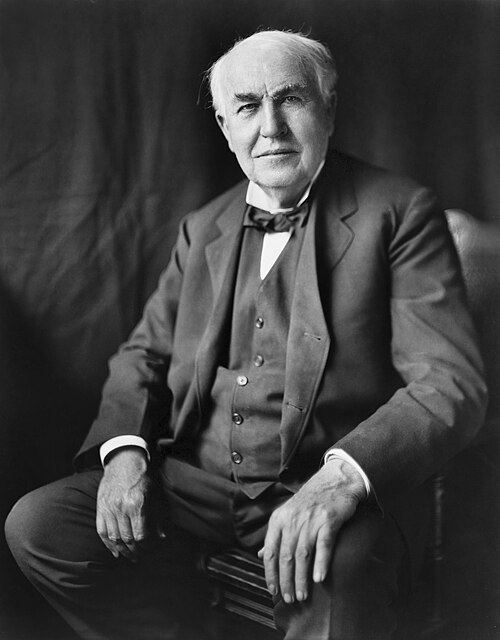
Thomas Alva Edison

ENTP - Debater

Category

Technology

Nationality

American

Occupation

Inventor, Businessman

About Thomas Alva Edison

Thomas Edison was a prolific American inventor and businessman, widely regarded as one of the greatest innovators of the late 19th and early 20th centuries. He is best known for developing the practical electric light bulb and establishing the world's first industrial research laboratory, holding over 1,000 US patents.

Personality Profile: ENTP

Confidence: 85%

Personality Analysis

Edison exemplifies the classic ENTP archetype, driven by a dominant Extraverted Intuition (Ne). His mind constantly generated a torrent of ideas and connections, seeing possibilities for invention and improvement everywhere. This was not abstract ideation; it was relentlessly applied to practical problems, fueled by his auxiliary Introverted Thinking (Ti). He needed to understand the underlying principles through hands-on experimentation, famously declaring, ‘I have not failed. I’ve just found 10,000 ways that won’t work.’ This Ti-driven pragmatism channeled his Ne’s ideation into tangible, marketable products. His tertiary Extraverted Feeling (Fe) manifested not as deep personal warmth but as a keen understanding of public perception and market needs. He was a master showman who cultivated a public image as the ‘Wizard of Menlo Park’ and understood the power of his inventions to shape society and garner fame. His inferior Introverted Sensing (Si) is seen in his disregard for established methods and authority, preferring his own empirical approach. However, it also fueled his famous tenacity—once he set a goal, like the perfect filament, he would doggedly pursue it through endless repetition. Growth areas for an ENTP like Edison would involve integrating more Si to appreciate historical context and established knowledge, and developing his Fe to foster more collaborative and less adversarial professional relationships. His competitive drive often crossed into ruthlessness, a shadow side of the type’s argumentative streak.

Supporting Evidence

His establishment of the Menlo Park laboratory, the world’s first industrial research lab dedicated to constant, collaborative innovation, is a monument to his Ne-Ti process. His famous feud with Nikola Tesla (an INTJ) over AC vs. DC current showcases his combative debating style and preference for his own ‘practical’ system over a theoretically superior one, highlighting Ti-Fe dynamics. His relentless ‘trial and error’ method to find a durable light bulb filament, testing thousands of materials, demonstrates his Ti-driven empirical approach and inferior Si tenacity. His adept use of media, staging public demonstrations like electrifying a street in New York City, shows his understanding of Fe for public relations and market creation. His numerous patent lawsuits and aggressive business tactics to protect and commercialize his ideas reveal the competitive, sometimes unscrupulous side of his personality common to assertive ENTPs.

Cognitive Function Stack

Confidence: 85%

The cognitive function stack represents how an individual processes information and makes decisions based on Jungian personality type theory.

Auxiliary Function: Ti

Introverted Thinking - Analyzing and categorizing information logically and precisely.

Dominant Function: Ne

Extraverted Intuition - Seeing possibilities and connections in the external world.

Inferior Function: Si

Introverted Sensing - Recalling detailed information and maintaining traditions.

Tertiary Function: Fe

Extraverted Feeling - Connecting with others and maintaining social harmony.

Enneagram Personality Profile:

Confidence: 85%

3w4

Big Five Personality Traits

Confidence: 85%

The Big Five personality traits represent the five broad dimensions of personality that are commonly used to describe human personality.

Openness 0%
Conscientiousness 0%
Extraversion 0%
Agreeableness 0%
Neuroticism 0%

Similar ENTP Characters

Explore other characters with similar personality traits