The INTP & INFP Alchemy Behind Daoism and the Band Wan Qing: Unlocking the Secret to Creative Synergy
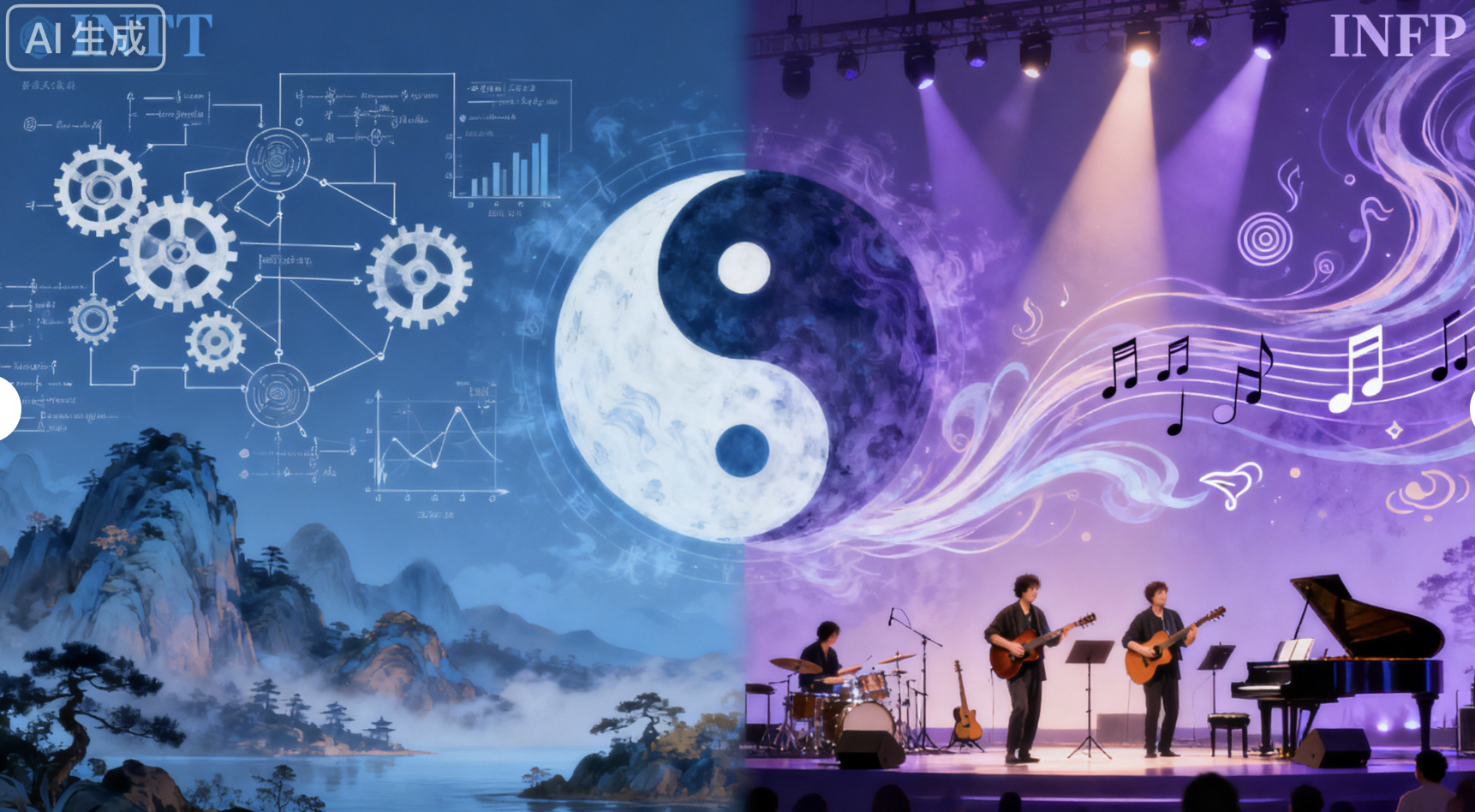
The intricate dance between personality and creativity often reveals itself in unexpected places—from ancient philosophies to modern music. Daoism, with its enigmatic blend of intuitive depth and rational detachment, carries what some describe as a hybrid INTP and INFP essence. This same dynamic echoes in the work of the Chinese band Wan Qing (Universal Youth Hotel), whose albums serve as case studies in how these two personality types synergize.
Understanding the INTP and INFP interplay isn’t just an exercise in typology; it’s a gateway to unlocking how complementary minds can drive artistic innovation and professional collaboration.
INTPs, known as the Logicians, thrive on logical coherence and abstract systems. They dissect ideas with precision, often exploring themes like existentialism or irrationalism—much like Dylan Thomas’s poetry, which resonates with INTPs’ love for deconstructing complex concepts. INFPs, the Mediators, prioritize authenticity and emotional depth. They channel their inner values into art, creating works that evoke profound feeling. When these types converge, as seen in Daoist texts or Wan Qing’s discography, the result is a fusion of analytical rigor and emotive resonance.
Take Wan Qing’s album Universal Youth Hotel. Tracks like “Qin Huang Dao” exemplify the INFP’s dominant Fi (Introverted Feeling), radiating raw emotional intensity and vivid imagery. The song’s narrative depth and introspective longing align perfectly with the INFP’s desire to express universal human experiences. Meanwhile, the band’s later album Ji Southwest Lin Lu Xing shifts toward an INTP-driven approach, emphasizing Ti (Introverted Thinking) and Ni (Introverted Intuition). This album feels like an intellectual excavation—structured, almost architectural in its composition, reminiscent of a scientific treatise like Tian Gong Kai Wu.
The collaboration between Wan Qing’s members underscores this dynamic. Dong Yaqian, the lead vocalist and guitarist, embodies the INFP’s soulful authenticity. His lyrical delivery and melodic choices reflect a deep connection to inner values. In contrast, Ji Geng, the bassist and an English teacher with a literature background, epitomizes the INTP archetype. His master’s thesis on irrationalism in Dylan Thomas’s poetry is a classic INTP pursuit—analyzing the intersection of logic and chaos. Together, they create music that balances emotional vulnerability with intellectual depth, proving that INTPs and INFPs can co-create seamlessly when focused on a shared vision.
Why does this partnership thrive? INTPs and INFPs both operate in the realm of ideas, but their approaches differ. INTPs prioritize truth and structure, often playing the role of the architect who builds frameworks. INFPs seek meaning and harmony, acting as the emotional core that infuses projects with purpose. In creative fields, this duality allows for art that is both conceptually sound and emotionally stirring. Daoism mirrors this balance: its texts, such as the Dao De Jing, weave together paradoxical insights (INTP) with poetic wisdom (INFP), inviting contemplation without sacrificing depth.
For career development, this synergy offers valuable lessons. INTPs excel in roles that require analysis, innovation, and strategic planning—fields like research, technology, or academia. INFPs shine in creative, humanitarian, or counseling professions where they can align work with personal values. When collaborating, INTPs benefit from the INFP’s ability to humanize their ideas, while INFPs gain from the INTP’s logical clarity. In teams, this pairing can mitigate weaknesses: the INTP’s tendency toward detachment is balanced by the INFP’s empathy, and the INFP’s idealism is grounded by the INTP’s rationality.
However, challenges can arise when personal emotions intrude. INTPs may struggle to navigate the INFP’s need for emotional validation, while INFPs might feel dismissed by the INTP’s focus on objectivity. Yet, in professional or artistic settings where the goal transcends interpersonal dynamics, these types achieve remarkable harmony. The key is establishing clear, shared objectives—whether composing an album or developing a philosophical thesis—that allow both parties to contribute their strengths without friction.
Ultimately, the INTP-INFP dynamic reminds us that creativity often flourishes at the intersection of logic and emotion. From Daoist philosophy to Wan Qing’s genre-defying music, this partnership demonstrates how divergent thinking styles can produce cohesive, impactful work. For individuals exploring their career paths, recognizing these patterns can inform collaborations, team formations, and even personal growth. By embracing the complementary traits of INTP and INFP minds, we unlock potential not only in art but in any field where innovation and meaning intersect.
In a world that often forces choices between reason and passion, the INTP and INFP alliance offers a third path—one where analysis and empathy coexist, and where the pursuit of truth and beauty becomes a shared journey.
More INTP & INFP Resources
- 📊 Take the Free Personality Test — Discover your type in 5 minutes →
- 🧠 INTP Personality Guide — Complete deep dive into the Logician →
- 🎭 INTP Character Database — 57 INTP characters →
- 🎭 INFP Character Database — 59 INFP characters →
- 🔬 The Diplomat Personality Types — The NF temperament family →