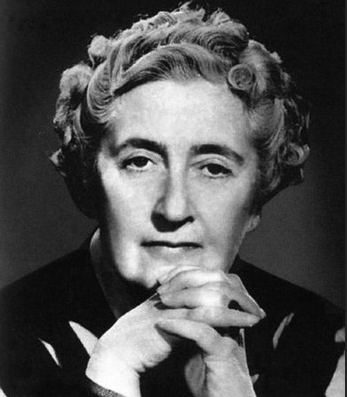
Agatha Christie exemplifies the ISTJ personality type, characterized by a dominant Introverted Sensing (Si) function. Her writing process was deeply rooted in method, routine, and the accumulation of factual details, hallmarks of Si. She worked with a systematic discipline, often plotting novels meticulously in advance and utilizing her extensive knowledge of poisons and train timetables, showing a reliance on past knowledge and concrete data. Her auxiliary Extraverted Thinking (Te) is evident in the logical, efficient, and puzzle-like structure of her novels, where clues are presented fairly for the reader to solve, and the resolution is a triumph of applied reason over chaos.
Her interpersonal style was intensely private and reserved, consistent with ISTJ introversion. She shunned the literary spotlight and valued her close family circle, a reflection of her tertiary Introverted Feeling (Fi) which guided her personal values and loyalties quietly. Her inferior Extraverted Intuition (Ne) manifested in controlled bursts—the brilliant, often surprising ‘twist’ endings that subvert expectations. However, a fear of the chaotic possibilities of Ne may have contributed to periods of personal stress, such as her famous 1926 disappearance.
As a growth area, embracing her inferior Ne could be seen in her later willingness to experiment with form, as in the unconventional narrative of ‘The Murder of Roger Ackroyd’ or the play ‘The Mousetrap.’ Her personality was a powerful engine for productivity; her Si-Te axis provided the reliability and structure to produce an immense body of work, while her Fi ensured it was guided by a personal, if private, moral code that often saw justice served and order restored.