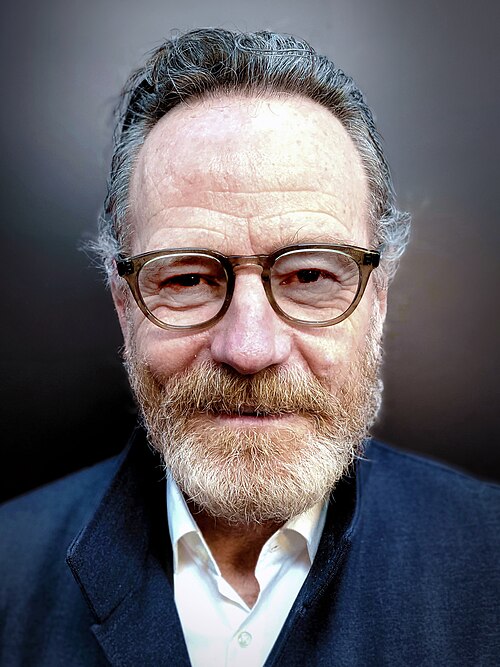
Bryan Cranston exemplifies the ISTJ personality type, driven by Introverted Sensing (Si) and Extraverted Thinking (Te). His dominant Si is evident in his unparalleled work ethic and reliance on past experiences and established techniques to build his characters. He approaches each role with a librarian’s precision, researching meticulously, logging detailed notes on his character’s backstory and motivations, and adhering to a disciplined rehearsal process. This reliance on concrete data and proven methods ensures a consistent, reliable, and deeply authentic performance.
His auxiliary Te manifests in his highly organized, efficient, and results-oriented approach to his career. Cranston views acting as a craft to be mastered, not just an art form. He is known for being a pragmatic and professional collaborator on set, focusing on the logistics of storytelling and the most effective way to achieve the director’s vision. This Te-Si combination creates his signature style: a controlled, detailed, and powerfully understated intensity that builds slowly and deliberately, rather than through explosive, unpredictable flair.
Interpersonally, as an introvert, Cranston maintains a notably private life, presenting a reserved, modest, and often self-deprecating public face. His tertiary Introverted Feeling (Fi) provides a strong internal compass of personal values and integrity, which guides his choice of roles and his conduct in the industry. This Fi, filtered through his dominant Si, means his principles are often traditional and deeply felt, lending weight to his portrayals of familial duty and moral conflict. His inferior Extraverted Intuition (Ne) can be seen in his careful, selective forays into risk-taking—such as transitioning from comedic ‘Malcolm in the Middle’ to the dark drama of ‘Breaking Bad’—which are calculated leaps based on solid preparation, not whimsical gambles.
Growth for the ISTJ often involves integrating their inferior Ne, which Cranston has done successfully by embracing complex, transformative roles that challenge his established persona. While he thrives on structure, his ability to explore the chaotic, ‘what-if’ possibilities of a character like Walter White demonstrates a healthy engagement with this function. However, his core remains grounded in Si-Te: a master craftsman who builds monumental performances brick by logical brick, relying on duty, detail, and disciplined execution above all else.