Angela Merkel - ISTJ Personality Type

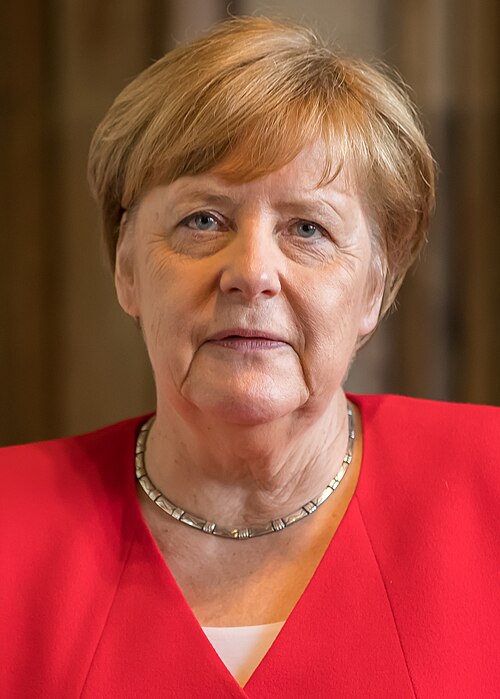
Angela Merkel

ISTJ - Logistician

Category

Politics

Nationality

German

Occupation

Former Chancellor of Germany

About Angela Merkel

Angela Merkel is a German former politician and scientist who served as Chancellor of Germany from 2005 to 2021. She was the first woman to hold the office and is widely regarded as one of the world's most influential leaders of the 21st century. She is known for her pragmatic, science-based leadership, her steady handling of multiple crises including the Eurozone debt crisis and the European migrant crisis, and her role as a de facto leader of the European Union.

Personality Profile: ISTJ

Confidence: 85%

Personality Analysis

Angela Merkel’s personality is a classic example of an ISTJ, characterized by Introverted Sensing (Si) as her dominant function. This function grounds her in past experience, factual data, and established procedures. She is known for her meticulous preparation, deep respect for institutional stability, and cautious, step-by-step approach to policy. Her leadership was not built on visionary charisma but on a steadfast commitment to duty, order, and what has proven to work. Her auxiliary function, Extraverted Thinking (Te), is evident in her decisive, logical, and results-oriented management of crises. She processed vast amounts of information, sought expert counsel, and made clear, if sometimes unpopular, decisions based on a pragmatic cost-benefit analysis, as seen in her handling of the Eurozone bailouts. Her tertiary Introverted Feeling (Fi) provided a strong, if private, internal compass of values—such as humanitarian duty during the 2015 refugee influx—which she expressed not emotionally but as a matter of principled action. Her inferior Extraverted Intuition (Ne) manifests as a cautiousness toward unpredictable, abstract scenarios. While she could anticipate long-term risks (like climate change), her instinct was to manage them through incremental, concrete policy rather than radical, untested transformation. Her growth area involved occasionally appearing inflexible or slow to adapt when entirely novel paradigms emerged, requiring her to move beyond familiar historical analogies.

Supporting Evidence

Her methodical, fact-based response to the Fukushima nuclear disaster, leading to Germany’s Energiewende (energy transition), showcases Si-Te: using a concrete event to logically re-evaluate long-standing policy. During the Eurozone crisis, her famous insistence on ‘austerity for bailouts’ reflected Te’s focus on rules, conditionality, and fiscal discipline, grounded in Si’s respect for stable economic frameworks. Her initial ‘Wir schaffen das’ (‘We can do this’) statement on the refugee crisis demonstrated a Fi-principled stance, but its implementation was quickly followed by Te-driven border control deals (e.g., with Turkey) to restore order. Her famously reserved and private personal style, avoiding grand rhetoric and preferring small working groups, is a hallmark of ISTJ introversion and dislike for unnecessary external stimulation.

Cognitive Function Stack

Confidence: 85%

The cognitive function stack represents how an individual processes information and makes decisions based on Jungian personality type theory.

Auxiliary Function: Te

Extraverted Thinking - Organizing and structuring the external world logically and efficiently.

Dominant Function: Si

Introverted Sensing - Recalling detailed information and maintaining traditions.

Inferior Function: Ne

Extraverted Intuition - Seeing possibilities and connections in the external world.

Tertiary Function: Fi

Introverted Feeling - Making decisions based on internal values and personal ethics.

Enneagram Personality Profile:

Confidence: 85%

1w9

Big Five Personality Traits

Confidence: 85%

The Big Five personality traits represent the five broad dimensions of personality that are commonly used to describe human personality.

Openness 0%
Conscientiousness 0%
Extraversion 0%
Agreeableness 0%
Neuroticism 0%