Catherine de' Medici - ISTJ Personality Type

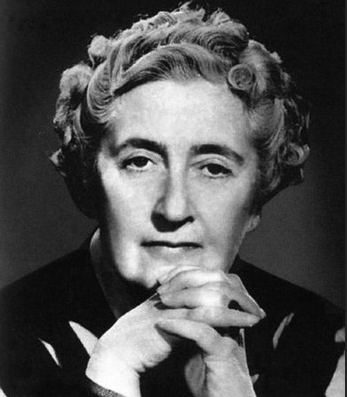
Catherine de' Medici

ISTJ - Logistician

Category

Politics

Nationality

Italian (Florentine)

Occupation

Queen Consort, Regent of France, Political Advisor

About Catherine de' Medici

Catherine de' Medici was the Italian-born Queen of France as the wife of King Henry II and later served as regent and a central political figure during the reigns of her sons. She is known for her ruthless political acumen and her role in the French Wars of Religion, where she navigated intense factional conflict between Catholics and Protestants (Huguenots). Her legacy is defined by pragmatic statecraft, patronage of the arts, and the controversial St. Bartholomew's Day Massacre.

Personality Profile: ISTJ

Confidence: 85%

Personality Analysis

Catherine de’ Medici exemplifies the ISTJ (Introverted Sensing with Extraverted Thinking) personality type. Her dominant Introverted Sensing (Si) is evident in her profound reliance on tradition, precedent, and past experiences. Having grown up in the volatile political environment of Renaissance Italy and entering the French court as an outsider, she internalized lessons of survival and institutional order. She viewed the preservation of the Valois monarchy and its Catholic traditions as her sacred duty, using past protocols and established structures as her primary guide. Her decision-making was governed by her auxiliary Extraverted Thinking (Te), which sought efficient, logical, and often ruthlessly pragmatic solutions to political crises. She valued order, hierarchy, and clear outcomes, famously attempting to mediate religious conflict through strategic marriages and edicts, though these were always calculated to maintain royal authority.

Her interpersonal dynamics were shaped by her tertiary Introverted Feeling (Fi) and the core motivations of an Enneagram 6w5. While publicly stoic and dutiful, privately she was fiercely protective of her children and the dynasty, a deeply held personal value (Fi). However, this loyalty was channeled through a lens of profound anxiety and suspicion (Enneagram 6). Her inferior Extraverted Intuition (Ne) manifested as a deep-seated fear of unforeseen chaos, conspiracy, and alternative futures that could threaten the stable order she worked to maintain. This fear often paralyzed her into periods of indecision but could also trigger pre-emptive, drastic actions to neutralize perceived threats, as she constantly sought to anticipate every possible negative outcome.

Catherine’s growth areas revolved around the integration of her inferior Ne. At her best, she could be a remarkably adaptive strategist, using her vast network of agents to gather intelligence and foresee trends. However, under extreme stress, her fear of the unknown and novel possibilities (like the rising Protestant faith as a political force) led to catastrophic, black-and-white thinking. Her attempts to control every variable sometimes created the very chaos she feared, as seen in the ultimate failure of her religious policies. Her personality was that of a consummate institutionalist, not an innovator, who believed that preserving the system through meticulous, traditional, and sometimes brutal pragmatism was the highest form of service.


Supporting Evidence

Her meticulous planning and reliance on established ceremony is seen in the lavish court festivals she orchestrated (like the ‘Magnificences’ at Bayonne), which were not mere entertainments but carefully staged political tools to demonstrate royal power and unity, a classic Si-Te application. The Edict of January (1562), which granted limited tolerance to Huguenots, was a pragmatic (Te) attempt to impose legal order and temporary stability on a fracturing kingdom, showing her preference for systematized solutions over ideological purity. Her infamous shift to supporting the St. Bartholomew’s Day Massacre (1572) demonstrates the collapse under stress of her inferior Ne: faced with the perceived imminent threat of a Huguenot coup after the failed assassination of Admiral Coligny, she approved a drastic, pre-emptive strike to eliminate the leadership, a catastrophic failure of foresight born of deep-seated suspicion. Finally, her decades-long regency and advisory role, where she managed state finances, diplomacy, and patronage with bureaucratic diligence, even as kings changed, underscores her ISTJ commitment to duty, institution, and practical administration above personal glory.

Cognitive Function Stack

Confidence: 85%

The cognitive function stack represents how an individual processes information and makes decisions based on Jungian personality type theory.

Auxiliary Function: Te

Extraverted Thinking - Organizing and structuring the external world logically and efficiently.

Dominant Function: Si

Introverted Sensing - Recalling detailed information and maintaining traditions.

Inferior Function: Ne

Extraverted Intuition - Seeing possibilities and connections in the external world.

Tertiary Function: Fi

Introverted Feeling - Making decisions based on internal values and personal ethics.

Enneagram Personality Profile:

Confidence: 85%

6w5

Big Five Personality Traits

Confidence: 85%

The Big Five personality traits represent the five broad dimensions of personality that are commonly used to describe human personality.

Openness 0%
Conscientiousness 0%
Extraversion 0%
Agreeableness 0%
Neuroticism 0%