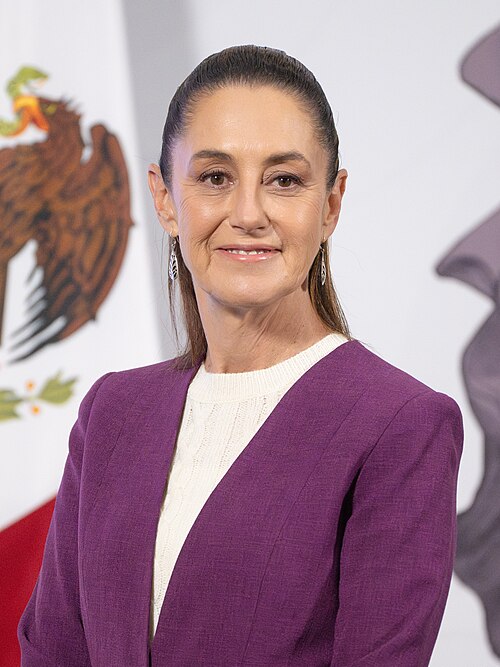
Claudia Sheinbaum exemplifies the ISTJ personality type, characterized by a dominant Introverted Sensing (Si) and auxiliary Extraverted Thinking (Te). Her Si is evident in her reliance on past data, established procedures, and concrete facts. She approaches governance with a methodical, step-by-step methodology, valuing stability and incremental improvement based on proven models. This is complemented by her strong Te, which drives her to implement efficient, logical systems and achieve tangible results, as seen in her focus on measurable outcomes in infrastructure and public policy.
Her decision-making style is heavily influenced by this Si-Te axis. She gathers extensive factual information, analyzes it logically, and applies it within a structured framework. This makes her appear pragmatic, unflappable, and sometimes rigid. Interpersonally, her introverted nature and focus on duty over charm result in a reserved, somewhat formal public persona. She builds loyalty through demonstrated competence and reliability rather than charismatic appeal, aligning with the tertiary Introverted Feeling (Fi) which holds strong internal values, often related to justice and public service.
Growth areas for an ISTJ like Sheinbaum involve engaging her inferior function, Extraverted Intuition (Ne). This can manifest as a potential reluctance to consider highly unconventional or speculative solutions, preferring the safety of the known. Under stress, she might become overly dogmatic in her adherence to plan. Her leadership challenge is balancing her natural preference for order and precedent with the need for visionary adaptability in a complex political landscape. The 1w9 Enneagram reinforces her ISTJ core, combining a reformist’s desire for correctness and improvement (Type 1) with a 9 wing’s desire for harmony and stability, leading to a calm, principled, but determined demeanor.