Jack Roosevelt Robinson - ISTJ Personality Type

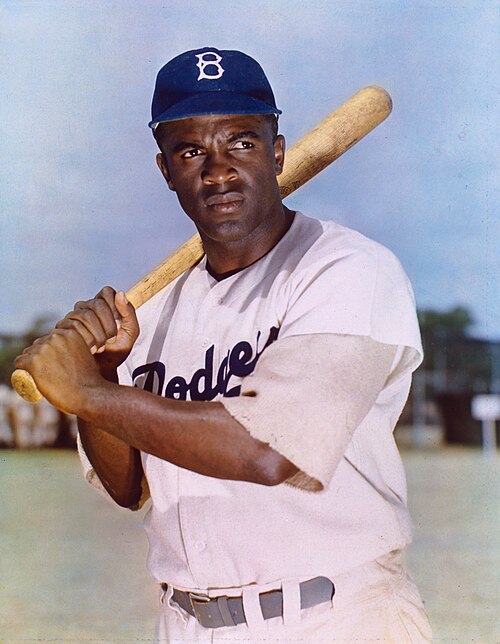
Jack Roosevelt Robinson

ISTJ - Logistician

Category

Sports

Nationality

United States of America

Occupation

Professional Baseball Player

About Jack Roosevelt Robinson

Jackie Robinson was an American professional baseball player who became the first African American to play in Major League Baseball (MLB) in the modern era, breaking the color barrier in 1947. He is known not only for his exceptional athletic talent as a second baseman for the Brooklyn Dodgers, but also for his profound courage and restraint in the face of intense racism and hostility, which helped pave the way for the civil rights movement.


Personality Profile: ISTJ

Confidence: 85%

Personality Analysis

Jackie Robinson exhibits the classic traits of an ISTJ (The Logistician). His dominant Introverted Sensing (Si) is evident in his reliance on discipline, routine, and past experience. He prepared meticulously for his role, drawing on his athletic history and understanding the immense historical weight of his actions. His auxiliary Extraverted Thinking (Te) drove his efficient, results-oriented play on the field and his pragmatic approach to the immense challenge before him. He understood the strategic necessity of his success for the broader cause and focused on executing his role with flawless competence. Interpersonally, Robinson was reserved (Introversion) but not passive. His leadership was demonstrated through action and steadfast reliability, not fiery speeches. His tertiary Introverted Feeling (Fi) provided the deep-seated, personal moral compass that fueled his endurance. The injustice he faced was not just a societal problem but a profound personal affront to his strong inner values of fairness and dignity. His growth area, inferior Extraverted Intuition (Ne), can be seen in the immense pressure of facing unpredictable, novel threats—the unknown reactions of crowds, opponents, and society. His triumph was mastering this function under fire, turning unprecedented hostility into a catalyst for historic change.

Supporting Evidence

His agreement with Branch Rickey to ‘turn the other cheek’ for the first few years of his career demonstrates a Te-Fi axis in service of a larger strategic goal, suppressing his natural fiery temperament (Fi) for a calculated outcome (Te). His consistent, stellar performance under extreme pressure showcases his Si-Te reliance on practiced skill and focused execution. His military career, where he faced a court-martial for refusing to move to the back of a segregated bus, reveals his strong internal moral principle (Fi) against injustice. After establishing himself, he became more outspoken in the civil rights movement, showing the integration of his Fi values with his public platform, a sign of personality maturation.

Cognitive Function Stack

Confidence: 85%

The cognitive function stack represents how an individual processes information and makes decisions based on Jungian personality type theory.

Auxiliary Function: Te

Extraverted Thinking - Organizing and structuring the external world logically and efficiently.

Dominant Function: Si

Introverted Sensing - Recalling detailed information and maintaining traditions.

Inferior Function: Ne

Extraverted Intuition - Seeing possibilities and connections in the external world.

Tertiary Function: Fi

Introverted Feeling - Making decisions based on internal values and personal ethics.

Enneagram Personality Profile:

Confidence: 85%

1w9

Big Five Personality Traits

Confidence: 85%

The Big Five personality traits represent the five broad dimensions of personality that are commonly used to describe human personality.

Openness 0%
Conscientiousness 0%
Extraversion 0%
Agreeableness 0%
Neuroticism 0%