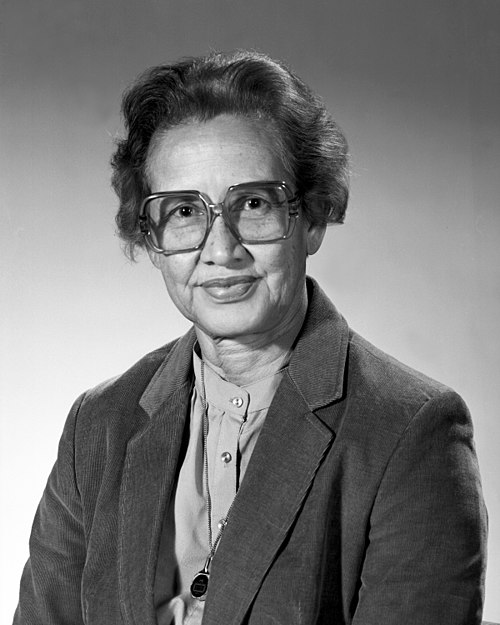
Katherine Johnson’s personality profile strongly aligns with the ISTJ type, which is characterized by Introverted Sensing (Si) as the dominant function and Extraverted Thinking (Te) as the auxiliary. Her work style demonstrates the hallmarks of Si: a profound reliance on past data, established procedures, and meticulous attention to factual detail. She built her calculations on a bedrock of verified numbers and trusted methods, finding security and competence in the systematic application of knowledge. Her cognitive process was not about speculative theories (Ne, her inferior function) but about applying proven mathematical principles with flawless precision to solve concrete, immediate problems.
Her auxiliary Te was expressed through her drive for efficiency, logical problem-solving, and a results-oriented focus. She famously asked to be included in mission-critical briefings because, as she noted, they omitted the data she needed to verify the computer’s work. This demonstrates Te’s need for direct access to facts to apply logic effectively. She navigated the complex social and institutional barriers of NASA not with overt confrontation (low E), but with a quiet, persistent application of her undeniable competence and a firm, logical insistence on the requirements of the task at hand.
Interpersonally, her ISTJ nature manifested as reserved but deeply principled. Her tertiary Introverted Feeling (Fi) provided a strong internal compass of right and wrong, fueling her determination to overcome racial and gender discrimination through excellence rather than overt activism. She maintained a calm, professional demeanor, building trust through consistent reliability. Growth for an ISTJ often involves engaging more with the inferior function, Extraverted Intuition (Ne). In Johnson’s case, her ability to trust and work with the new electronic computers, while still verifying their output, shows a balanced use of her trusted Si/Te with a willingness to adapt to new technological possibilities.