Mary Teresa Barra - ISTJ Personality Type

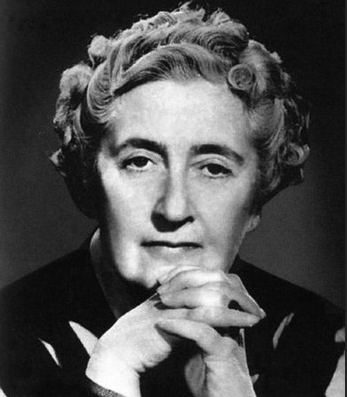
Mary Teresa Barra

ISTJ - Logistician

Category

Business

Nationality

American

Occupation

Chair and Chief Executive Officer of General Motors

About Mary Teresa Barra

Mary Barra is an American business executive who made history by becoming the first female CEO of a major global automaker, General Motors. She is known for leading GM's strategic pivot towards electric and autonomous vehicles, navigating significant crises, and championing a corporate culture of accountability and innovation.

Personality Profile: ISTJ

Confidence: 85%

Personality Analysis

Mary Barra exemplifies the ISTJ personality type, characterized by a dominant Introverted Sensing (Si) function. This is evident in her deep reliance on internalized past experiences, institutional knowledge, and proven processes. She rose through GM’s ranks over decades, building a comprehensive, detail-oriented understanding of the company’s engineering, manufacturing, and cultural history. This reservoir of experiential knowledge informs her cautious yet decisive leadership, allowing her to apply lessons from the past to present challenges, such as the ignition switch recall, with a focus on preventing recurrence.

Her auxiliary Extraverted Thinking (Te) drives her public-facing leadership style. Barra is known for her no-nonsense, pragmatic, and results-oriented approach. She sets clear objectives, streamlines operations, and makes tough, logical decisions to improve efficiency and profitability, such as restructuring global operations and exiting unprofitable markets. Her communication is direct and factual, prioritizing accountability and transparent metrics. This Te-Si combination creates a leader who values stability, order, and proven systems, but who can also implement decisive, logical action to reform those systems when necessary.

Her tertiary Introverted Feeling (Fi) and inferior Extraverted Intuition (Ne) complete her cognitive stack. Barra’s Fi manifests in a strong, privately held personal code of ethics and loyalty to GM, which underpins her famous mandate to ‘do the right thing’ even when it is difficult. However, as an ISTJ, her growth area lies in developing her Ne. Early in her tenure, she could have been perceived as overly cautious regarding disruptive trends. A significant part of her leadership evolution has been strategically embracing the uncertain, long-term possibilities (Ne) of electric and autonomous mobility, moving GM beyond its traditional comfort zone to ensure future relevance, thus demonstrating integration of her inferior function.


Supporting Evidence

Her handling of the 2014 ignition switch crisis demonstrated her ISTJ traits: she relied on established facts (Si), initiated a transparent, data-driven investigation (Te), and enforced a strict principle of accountability (‘do the right thing’ - Fi). Her career path itself is evidence, having spent her entire professional life at GM, mastering its systems from the factory floor up—a classic Si/Te development. Her ‘Zero, Zero, Zero’ vision (zero crashes, zero emissions, zero congestion) showcases evolved Ne, pushing the company toward a future-oriented, albeit structured, transformation. Finally, her methodical, multi-year execution of the Ultium EV platform strategy, breaking down a visionary goal into precise engineering and manufacturing steps, perfectly illustrates dominant Si planning supported by auxiliary Te execution.

Cognitive Function Stack

Confidence: 85%

The cognitive function stack represents how an individual processes information and makes decisions based on Jungian personality type theory.

Auxiliary Function: Te

Extraverted Thinking - Organizing and structuring the external world logically and efficiently.

Dominant Function: Si

Introverted Sensing - Recalling detailed information and maintaining traditions.

Inferior Function: Ne

Extraverted Intuition - Seeing possibilities and connections in the external world.

Tertiary Function: Fi

Introverted Feeling - Making decisions based on internal values and personal ethics.

Enneagram Personality Profile:

Confidence: 85%

1w9

Big Five Personality Traits

Confidence: 85%

The Big Five personality traits represent the five broad dimensions of personality that are commonly used to describe human personality.

Openness 0%
Conscientiousness 0%
Extraversion 0%
Agreeableness 0%
Neuroticism 0%