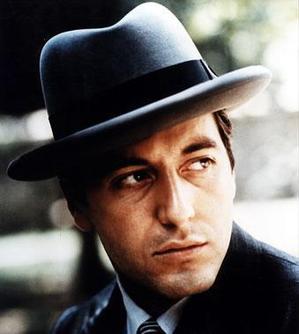
Michael Corleone is a quintessential ISTJ, defined by his introverted sensing (Si) and extroverted thinking (Te). His dominant Si grounds him in tradition, duty, and past experiences—initially his father’s world, which he rejects, but later the ‘lessons’ of that world which he internalizes as an immutable system to maintain. He operates not on passion but on a detached, logical framework (Te), making decisions based on efficiency, strategy, and cold assessment of facts to achieve stability and order for the family, which he redefines as his institution. His tertiary introverted feeling (Fi) manifests not as emotional warmth, but as a deep, private, and rigid internal code. His actions, however brutal, are justified by this personal sense of honor, duty, and betrayal. His tragic flaw stems from his inferior extroverted intuition (Ne). He is unable to envision a positive, alternative future outside his chosen path, seeing only threats, betrayals, and worst-case scenarios. This leads to his paranoia and the systematic destruction of the very familial bonds he sought to protect.
Michael’s decision-making is characterized by a preternatural calm and patience. He observes, gathers data, and then acts with devastating precision and finality, as seen in the simultaneous execution of rival bosses. Interpersonally, he is intensely private and guarded, creating emotional distance even from his wife and brother. He relates to others through roles and obligations rather than genuine intimacy. His growth area—or tragic descent—is the integration of his inferior Ne: to imagine forgiveness, trust, and a different legacy. Instead, his failure to do so leads him to order his brother’s murder, the ultimate act of sealing himself within his self-made prison of duty.
His Enneagram 1w9 reinforces this analysis. As a 1, he is driven by a need for integrity and a perfect, orderly system, but perverted into a crusade to ‘clean up’ the family business through morally corrupt means. The 9 wing adds a desire for peace and avoidance of direct conflict, which he achieves through preemptive, overwhelming strikes. This creates the paradox of a man who seeks peace and stability but can only achieve it through orchestrated violence, believing utterly in the rightness of his corrosive path.