Miss Jane Marple - ISTJ Personality Type

Miss Jane Marple

ISTJ - Logistician

Category

Literature

Nationality

British

Occupation

Amateur Detective

About Miss Jane Marple

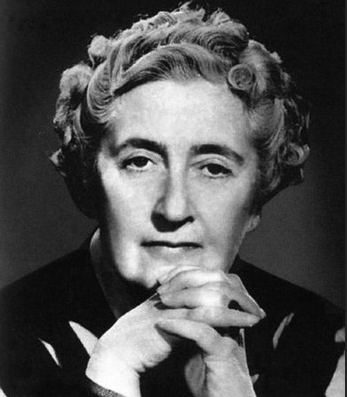
Miss Marple is a fictional amateur detective created by Agatha Christie. She is an elderly spinster living in the quaint village of St. Mary Mead, known for solving complex murders through her sharp understanding of human nature and analogies to village life. Her significance lies in being one of literature's most beloved and unlikely sleuths, subverting expectations of what a detective should be.

Personality Profile: ISTJ

Confidence: 85%

Personality Analysis

Miss Marple is a classic ISTJ, primarily driven by Introverted Sensing (Si). Her method is rooted in a vast internal archive of past observations and village parallels. She doesn’t rely on abstract theories but on concrete, remembered patterns of human behavior, using them as a reliable framework to understand new crimes. This Si-dominance gives her a nostalgic, traditional outlook and a keen eye for deviations from normal patterns, making her an exceptional noticer of details others overlook. Her auxiliary function, Extraverted Thinking (Te), is evident in her practical, logical, and efficient approach to problem-solving. She organizes facts, sequences events, and systematically eliminates possibilities. While she appears gentle, her conclusions are delivered with a Te-driven bluntness and a focus on factual correctness and justice. Her tertiary Introverted Feeling (Fi) provides her with a strong, internal moral compass—a sense of right and wrong that fuels her desire to see justice done, often framed in terms of village propriety. Her inferior function, Extraverted Intuition (Ne), manifests in her unique talent for drawing seemingly far-fetched connections between village scandals and major crimes. While she distrusts wild speculation, her genius lies in cautiously applying these Ne-like ‘parallels’ in a controlled, Si-grounded way. Interpersonally, she is reserved but uses her unthreatening, grandmotherly appearance (a product of low Extraversion) to her advantage, encouraging people to underestimate her and reveal secrets. A growth area for an ISTJ like Marple would be to more openly trust novel possibilities (Ne) without the immediate filter of past experience, though her success suggests a well-integrated use of her inferior function in her specific domain.


Supporting Evidence

In ‘The Murder at the Vicarage,’ she solves the case by meticulously comparing the behaviors and relationships of the suspects to past scandals in St. Mary Mead, applying Si’s catalog of human patterns. In ‘The Body in the Library,’ she calmly and methodically (Te) pieces together timelines and physical evidence, like the type of nail polish, to uncover the truth. Her famous line, ‘Human nature is much the same everywhere, and, of course, one has opportunities of observing it at closer quarters in a village,’ encapsulates her Si-Te approach. She often feigns confusion or talks about gardening to lower suspects’ guards, demonstrating her strategic use of her unassuming persona. Furthermore, her solution in ‘A Pocket Full of Rye’ hinges on connecting the murder method to a nursery rhyme, a leap of intuitive connection (Ne) that she nonetheless validates through practical, factual deduction (Te).

Cognitive Function Stack

Confidence: 85%

The cognitive function stack represents how an individual processes information and makes decisions based on Jungian personality type theory.

Auxiliary Function: Te

Extraverted Thinking - Organizing and structuring the external world logically and efficiently.

Dominant Function: Si

Introverted Sensing - Recalling detailed information and maintaining traditions.

Inferior Function: Ne

Extraverted Intuition - Seeing possibilities and connections in the external world.

Tertiary Function: Fi

Introverted Feeling - Making decisions based on internal values and personal ethics.

Enneagram Personality Profile:

Confidence: 85%

1w9

Big Five Personality Traits

Confidence: 85%

The Big Five personality traits represent the five broad dimensions of personality that are commonly used to describe human personality.

Openness 0%
Conscientiousness 0%
Extraversion 0%
Agreeableness 0%
Neuroticism 0%