Miyamoto Musashi - ISTP Personality Type

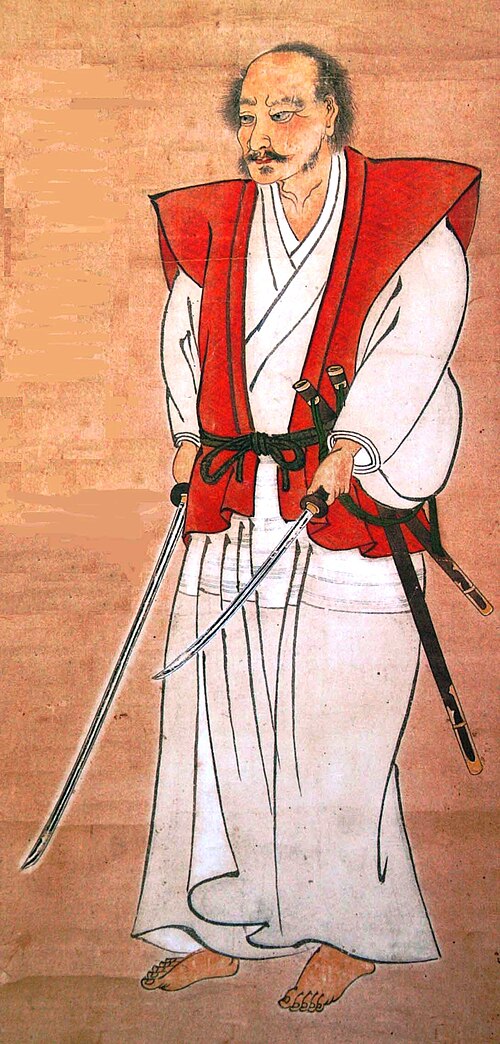
Miyamoto Musashi

ISTP - Virtuoso

Category

History

Nationality

Japanese

Occupation

Swordsman, Strategist, Writer, Artist

About Miyamoto Musashi

Miyamoto Musashi was a legendary Japanese swordsman, rōnin, and strategist of the early Edo period. He is renowned as one of the greatest swordsmen in Japanese history, undefeated in over 60 duels, and is the author of 'The Book of Five Rings,' a classic text on strategy, tactics, and philosophy.

Personality Profile: ISTP

Confidence: 85%

Personality Analysis

Miyamoto Musashi is a quintessential ISTP, driven by a dominant Introverted Thinking (Ti) function that seeks to understand the underlying mechanics and logic of combat and strategy. This internal framework-building is evident in his systematic deconstruction of sword-fighting into principles, later codified in ‘The Book of Five Rings.’ His decision-making is intensely pragmatic and efficient, focused on what works in the immediate, concrete reality, with little regard for social conventions or emotional appeals. His auxiliary Extraverted Sensing (Se) is exceptionally developed, granting him a hyper-awareness of his physical environment, his opponent’s movements, and the tactical opportunities of the moment. This Se-Ti loop makes him a master of improvisation and a formidable duelist who adapts instantly to changing circumstances. Interpersonally, Musashi’s inferior Extraverted Feeling (Fe) manifests as a lifelong detachment from social bonds and traditional structures. He was a perennial outsider, a rōnin who lived by his own code, often appearing aloof, blunt, or even ruthless. His tertiary Introverted Intuition (Ni) provided him with strategic foresight and a drive to synthesize his experiences into a broader philosophy, but it was always grounded by his Se-based reality testing. Growth for an ISTP like Musashi involves integrating the inferior Fe, which in his later years was hinted at through his artistic pursuits (calligraphy, painting) and his eventual focus on teaching a disciple, suggesting a move towards contributing his insights to a legacy beyond himself.

Supporting Evidence

His victory over Sasaki Kojirō at Ganryūjima demonstrates his Ti-Se adaptability; he arrived late to unnerve his opponent, used the sun’s position to his advantage, and carved a wooden sword from an oar, showcasing pragmatic problem-solving over honor-bound tradition. His solitary wandering and refusal to serve under a daimyō for most of his life highlight his fierce independence and inferior Fe, prioritizing personal freedom and mastery over social integration. The writing of ‘The Book of Five Rings’ late in life reveals his Ti-Ni synthesis, distilling a lifetime of concrete experience (Se) into an abstract, principled system of strategy. His famous ‘Two-Sword Style’ (Niten Ichi-ryū) was an innovative, non-conformist technique born from logical analysis (Ti) of combat mechanics and practical experimentation (Se), rejecting the orthodox single-sword approach.

Cognitive Function Stack

Confidence: 85%

The cognitive function stack represents how an individual processes information and makes decisions based on Jungian personality type theory.

Auxiliary Function: Se

Extraverted Sensing - Experiencing and interacting with the immediate environment.

Dominant Function: Ti

Introverted Thinking - Analyzing and categorizing information logically and precisely.

Inferior Function: Fe

Extraverted Feeling - Connecting with others and maintaining social harmony.

Tertiary Function: Ni

Introverted Intuition - Perceiving underlying patterns and developing long-range visions.

Enneagram Personality Profile:

Confidence: 85%

8w9

Big Five Personality Traits

Confidence: 85%

The Big Five personality traits represent the five broad dimensions of personality that are commonly used to describe human personality.

Openness 0%
Conscientiousness 0%
Extraversion 0%
Agreeableness 0%
Neuroticism 0%

Similar ISTP Characters

Explore other characters with similar personality traits