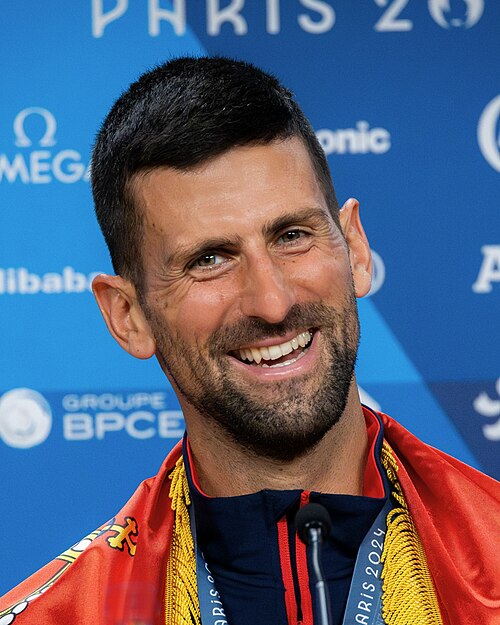
Novak Djokovic exemplifies the ISTJ personality type, characterized by Introverted Sensing (Si) as his dominant function. His entire career is built upon a foundation of meticulous routine, detailed physical preparation, and a profound reliance on past experiences and muscle memory. He internalizes vast amounts of data from previous matches to create a predictable, reliable structure for his game and life, from his famous gluten-free diet to his specific training regimens. This Si dominance provides the stable platform for his legendary consistency and endurance.
His auxiliary function, Extraverted Thinking (Te), is evident in his strategic, logical, and highly efficient approach to competition. Djokovic treats tennis as a solvable puzzle, clinically analyzing opponents’ weaknesses and deploying a game plan with machine-like precision. He makes in-match adjustments based on objective data (e.g., serve placement statistics, rally length) rather than emotion. This Te-Si loop makes him an unparalleled tactician who optimizes every detail for peak performance and record-chasing goal achievement, aligning with his Enneagram 3w4’s drive for success and unique distinction.
In interpersonal dynamics and under stress, his tertiary Introverted Feeling (Fi) and inferior Extraverted Intuition (Ne) become visible. His Fi fuels a deep, private sense of national pride and personal mission, sometimes manifesting in emotionally charged on-court celebrations or statements about his legacy. Under pressure, the inferior Ne can lead to bouts of frustration when faced with unpredictable scenarios (like a vocal crowd or an opponent’s inspired, unconventional play), though he typically masters this anxiety through a return to his Si-Te routines. His growth lies in integrating a healthier Ne—allowing for more spontaneity and broader perspectives off the court, moving beyond the identity of ‘the machine’ to a more holistic self-expression.