Rafael Nadal Parera - ISTJ Personality Type

Rafael Nadal Parera

ISTJ - Logistician

Category

Sports

Nationality

Spain

Occupation

Professional Tennis Player

About Rafael Nadal Parera

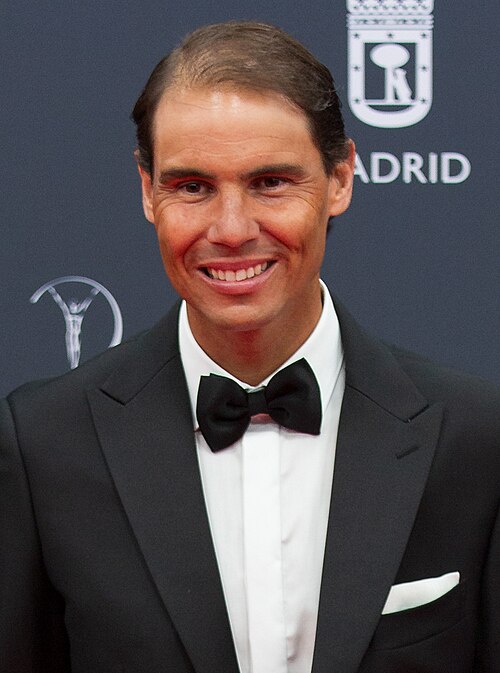
Rafael Nadal is a Spanish professional tennis player widely regarded as one of the greatest of all time. He is known for his unparalleled dominance on clay courts, particularly at the French Open where he has won a record 14 titles, and for his intense competitiveness, physicality, and fighting spirit.

Personality Profile: ISTJ

Confidence: 85%

Personality Analysis

Rafael Nadal exemplifies the ISTJ personality type through his dominant Introverted Sensing (Si). He is renowned for his reliance on established routines, meticulous preparation, and a profound respect for tradition and proven methods. His game is built on a foundation of immense physical training, repetitive drilling, and a deep internal catalog of past experiences and match situations. This allows him to execute high-percentage plays with relentless consistency, trusting in a process refined over years. His auxiliary Extraverted Thinking (Te) is evident in his on-court strategic execution. He approaches matches with a clear, logical plan, adapts tactics pragmatically based on the opponent and conditions, and displays immense efficiency in problem-solving during high-pressure moments. His decision-making is not flashy but devastatingly effective, focused on exploiting weaknesses and maximizing his own formidable strengths. Interpersonally, Nadal’s tertiary Introverted Feeling (Fi) and auxiliary Te combine to create a persona of fierce but principled competitiveness. He is intensely loyal to his team and family, displays deep personal values of humility and respect (often downplaying his own achievements), and channels his powerful emotions into disciplined effort rather than overt displays. His growth area, inferior Extraverted Intuition (Ne), manifests in a preference for the known over speculative risks; he can be resistant to radical changes in style or schedule and expresses anxiety about unforeseen circumstances, preferring to control his environment through ritual and preparation.

Supporting Evidence

His legendary pre-match and between-point rituals (lining up water bottles, specific towel routines) demonstrate dominant Si’s need for sensory order and predictability. His unparalleled work ethic and physical conditioning, often training for hours beyond his peers, reflect the Te-driven pursuit of tangible results and efficiency. His famous humility in victory and defeat, consistently praising opponents and showing deep respect for the sport’s traditions, highlights strong Fi values. His ability to stage monumental comebacks from injury and match deficits, such as the 2022 Australian Open win, showcases his Si-Te reliance on ingrained discipline and logical point-by-point problem-solving under extreme pressure, rather than on speculative, high-risk shots.

Cognitive Function Stack

Confidence: 85%

The cognitive function stack represents how an individual processes information and makes decisions based on Jungian personality type theory.

Auxiliary Function: Te

Extraverted Thinking - Organizing and structuring the external world logically and efficiently.

Dominant Function: Si

Introverted Sensing - Recalling detailed information and maintaining traditions.

Inferior Function: Ne

Extraverted Intuition - Seeing possibilities and connections in the external world.

Tertiary Function: Fi

Introverted Feeling - Making decisions based on internal values and personal ethics.

Enneagram Personality Profile:

Confidence: 85%

1w2

Big Five Personality Traits

Confidence: 85%

The Big Five personality traits represent the five broad dimensions of personality that are commonly used to describe human personality.

Openness 0%
Conscientiousness 0%
Extraversion 0%
Agreeableness 0%
Neuroticism 0%