Rosalind Elsie Franklin - ISTJ Personality Type

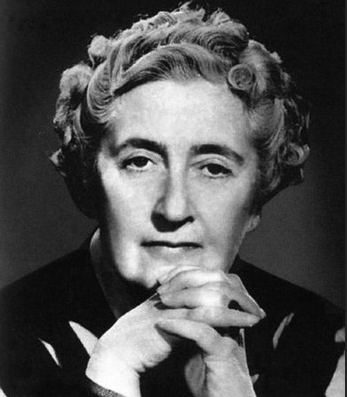
Rosalind Elsie Franklin

ISTJ - Logistician

Category

Science

Nationality

British

Occupation

Chemist, X-ray Crystallographer

About Rosalind Elsie Franklin

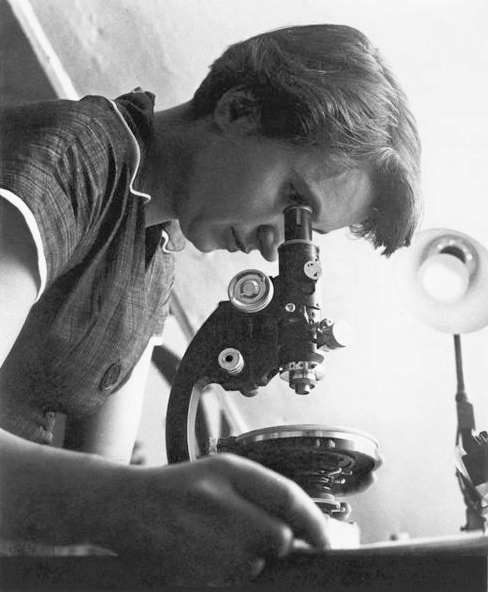
Rosalind Franklin was a British chemist and X-ray crystallographer whose work was central to the understanding of the molecular structures of DNA, RNA, viruses, coal, and graphite. She is best known for her crucial yet initially uncredited Photograph 51, which provided key evidence of DNA's double-helix structure. Her data and analysis were used by James Watson and Francis Crick in their Nobel Prize-winning model, a contribution recognized only posthumously.

Personality Profile: ISTJ

Confidence: 85%

Personality Analysis

Rosalind Franklin’s personality aligns strongly with the ISTJ (Introverted, Sensing, Thinking, Judging) type, driven by a dominant Introverted Sensing (Si) and auxiliary Extraverted Thinking (Te). Her Si is evident in her methodical, detail-oriented approach to research. She valued established, proven methods in X-ray crystallography and built her conclusions on a concrete foundation of observable, repeatable data. Her work was characterized by painstaking precision and a reliance on empirical evidence over abstract models. This Si dominance made her deeply thorough and skeptical of premature theorizing, such as the early helical models of DNA proposed by others. Her auxiliary Te manifested in her objective, logical, and highly organized work style. She structured her experiments with rigorous protocols and demanded clear, efficient results. Her communication was direct and focused on facts, sometimes perceived as blunt or impersonal, which reflected a Te-driven prioritization of task over social harmony. This function fueled her drive to master complex problems through systematic analysis and contributed to her reputation for exceptional competence and high professional standards. Interpersonally, her Introversion and Thinking preference often created distance. She maintained a formal, reserved demeanor with colleagues, preferring to work independently or with a small, trusted team like her assistant Raymond Gosling. Her tertiary Introverted Feeling (Fi) underpinned a strong, private sense of integrity and principles, which guided her ethical stance in science. However, clashes could occur when her Fi-driven standards (e.g., on data ownership and credit) conflicted with the more politically savvy or socially fluid approaches of others, such as Maurice Wilkins. A potential growth area for an ISTJ like Franklin lies in the inferior function, Extraverted Intuition (Ne). Her natural skepticism of unproven ideas could sometimes border on rigidity, making her initially dismissive of the helical hypothesis for DNA. Engaging more with speculative possibilities (Ne) could have complemented her superb data collection. Furthermore, developing her Feeling side might have aided in navigating the collaborative, yet competitive, social dynamics of her research environment, potentially leading to greater recognition during her lifetime.

Supporting Evidence

Her creation of Photograph 51 required immense patience and systematic precision (Si), capturing the image through meticulously controlled experimental conditions. She famously insisted on collecting more data before endorsing a DNA model, telling Watson and Crick their early model was wrong based on her factual observations (Te). Her strained relationship with Maurice Wilkins stemmed partly from her preference for clear, independent work boundaries and direct, fact-based communication, which clashed with his expectations (Te/Fi). She left King’s College London partly due to interpersonal friction and a desire for a more principled work environment, eventually producing superb work on the tobacco mosaic virus, demonstrating her persistent, detail-driven approach (Si/Te) in a new setting. Her legendary notebooks show an extraordinary level of organized, factual record-keeping, with every observation and measurement meticulously documented (Si/Te).

Cognitive Function Stack

Confidence: 85%

The cognitive function stack represents how an individual processes information and makes decisions based on Jungian personality type theory.

Auxiliary Function: Te

Extraverted Thinking - Organizing and structuring the external world logically and efficiently.

Dominant Function: Si

Introverted Sensing - Recalling detailed information and maintaining traditions.

Inferior Function: Ne

Extraverted Intuition - Seeing possibilities and connections in the external world.

Tertiary Function: Fi

Introverted Feeling - Making decisions based on internal values and personal ethics.

Enneagram Personality Profile:

Confidence: 85%

1w9

Big Five Personality Traits

Confidence: 85%

The Big Five personality traits represent the five broad dimensions of personality that are commonly used to describe human personality.

Openness 0%
Conscientiousness 0%
Extraversion 0%
Agreeableness 0%
Neuroticism 0%