Sergei Vasilyevich Rachmaninoff - ISTJ Personality Type

Sergei Vasilyevich Rachmaninoff

ISTJ - Logistician

Category

Music

Nationality

Russian

Occupation

Composer, Pianist, Conductor

About Sergei Vasilyevich Rachmaninoff

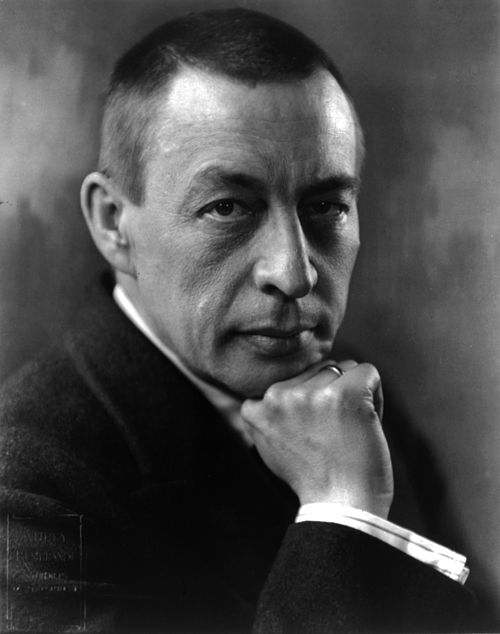
Sergei Rachmaninoff was a Russian composer, virtuoso pianist, and conductor of the late Romantic period. He is widely considered one of the finest pianists of his era and one of the last great representatives of Romanticism in classical music. He is best known for his intensely lyrical and technically demanding compositions, such as his Piano Concerto No. 2 and the Rhapsody on a Theme of Paganini.

Personality Profile: ISTJ

Confidence: 85%

Personality Analysis

Sergei Rachmaninoff exemplifies the ISTJ personality type, driven by a dominant Introverted Sensing (Si). This function is evident in his profound connection to musical tradition, his reverence for the forms and structures of the past (particularly the Russian Romantic tradition of Tchaikovsky), and his reliance on meticulous, habitual practice to achieve technical mastery. His compositions are not radical innovations but deeply felt evolutions of established forms, built upon a vast internal library of sensory and emotional experiences from his own life and cultural heritage. His auxiliary Extraverted Thinking (Te) provided the disciplined, logical framework for his creativity. Rachmaninoff was renowned for his relentless work ethic, precision, and perfectionism. He approached composition and performance with a craftsman’s rigor, structuring his days with strict practice schedules and demanding exactitude from himself and the musicians he conducted. This Te-Si combination made him a conservative force in music, valuing proven methods and tangible results over speculative experimentation. Interpersonally, Rachmaninoff was reserved, formal, and intensely private (characteristic of Introverted Sensing and Introverted Feeling). He was often described as having a ‘stone face’ at the piano, internalizing his deep passions rather than displaying them theatrically. His tertiary Introverted Feeling (Fi) fueled the profound, nostalgic, and often tragic emotional core of his music, which served as his primary mode of authentic self-expression. His inferior Extraverted Intuition (Ne) manifested as a fear of the unknown and catastrophic thinking, most famously during his three-year creative block following the disastrous premiere of his First Symphony, where he fixated on all possible negative outcomes and interpretations. Growth for an ISTJ like Rachmaninoff involves integrating the inferior Ne—learning to see possibility in failure and adaptability in change. His recovery, facilitated by hypnosis therapy, can be seen as a successful engagement with this function, allowing him to move past his fixed negative expectations and produce his most beloved work, the Second Piano Concerto. Throughout his life, he remained a pillar of tradition, discipline, and deep, structured emotion.

Supporting Evidence

The catastrophic failure of his Symphony No. 1 in 1897 led to a severe depressive and creative block, a classic inferior-Ne ‘grip’ experience where he became paralyzed by negative possibilities and criticism. His legendary discipline is evidenced by his rigid daily practice routine, even as a world-famous performer, showcasing dominant Si and auxiliary Te. His compositions, like the ‘All-Night Vigil’ and his piano concertos, are deeply rooted in Russian Orthodox chant and Romantic tradition, reflecting Si’s reverence for the past. His famous ‘stone-faced’ performance demeanor, contrasting with the passionate music, points to introverted feeling and a reserved nature. His eventual triumphant return with the Piano Concerto No. 2, dedicated to his therapist, demonstrates overcoming the inferior function through structured external help (Te) to rebuild his internal sense of order and tradition (Si).

Cognitive Function Stack

Confidence: 85%

The cognitive function stack represents how an individual processes information and makes decisions based on Jungian personality type theory.

Auxiliary Function: Te

Extraverted Thinking - Organizing and structuring the external world logically and efficiently.

Dominant Function: Si

Introverted Sensing - Recalling detailed information and maintaining traditions.

Inferior Function: Ne

Extraverted Intuition - Seeing possibilities and connections in the external world.

Tertiary Function: Fi

Introverted Feeling - Making decisions based on internal values and personal ethics.

Enneagram Personality Profile:

Confidence: 85%

1w9

Big Five Personality Traits

Confidence: 85%

The Big Five personality traits represent the five broad dimensions of personality that are commonly used to describe human personality.

Openness 0%
Conscientiousness 0%
Extraversion 0%
Agreeableness 0%
Neuroticism 0%