Susan Wojcicki - ISTJ Personality Type

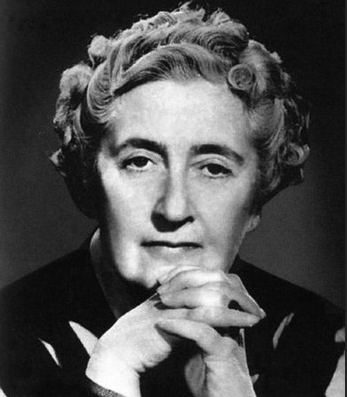
Susan Wojcicki

ISTJ - Logistician

Category

Technology

Nationality

United States

Occupation

Former CEO of YouTube, Technology Executive

About Susan Wojcicki

Susan Wojcicki is a pioneering American technology executive and long-time CEO of YouTube. She is known for being one of Google's earliest employees and instrumental in its growth, famously renting her garage to founders Larry Page and Sergey Brin. She championed the acquisition of YouTube for Google in 2006 and later became its CEO, shaping it into the world's dominant online video platform.

Personality Profile: ISTJ

Confidence: 85%

Personality Analysis

Susan Wojcicki exemplifies the ISTJ personality type, characterized by Introverted Sensing (Si) as her dominant function and Extraverted Thinking (Te) as her auxiliary. Her leadership is defined by a methodical, detail-oriented, and pragmatic approach. Si allows her to rely on proven methods and past experiences—such as her early foundational work at Google—to build stable, scalable systems for YouTube. She values institutional knowledge, procedure, and reliability, which manifested in her focus on building a sustainable business model for the platform through advertising and partner programs, rather than pursuing flashy, untested ventures. Her decision-making is heavily guided by Extraverted Thinking (Te). She is organized, results-oriented, and focuses on logical efficiency. As CEO, she was known for data-driven analysis to guide platform policies and growth strategies, seeking tangible outcomes and operational excellence. This Te-Si combination creates a leader who is exceptionally dependable, focused on concrete facts and historical data, and dedicated to maintaining order and integrity within a complex system. Interpersonally, Wojcicki presents as reserved, calm, and understated, consistent with introverted dominance. She is not a flamboyant or charismatic figurehead but leads through competence, preparation, and quiet determination. Her tertiary Introverted Feeling (Fi) provides a strong internal moral compass, aligning with her Enneagram 1 wing, driving her advocacy for responsible content policies and support for creators. Her growth area, Inferior Extraverted Intuition (Ne), can be seen in her initial reported hesitation about the YouTube acquisition, a characteristically cautious approach to novel possibilities, though she ultimately used her Te to logically assess and champion the disruptive opportunity.


Supporting Evidence

Her early career choices reflect Si/Te stability: leaving management consulting for the nascent but analytically rigorous Google. The famous garage rental was a practical, revenue-generating decision (Te) based on a tangible asset (Si). As YouTube CEO, her tenure was marked by systematizing the platform—developing the Partner Program, implementing precise content guidelines and monetization tools—all classic Te-driven organization applied to a massive, existing system (Si). Her leadership style during controversies (e.g., the ‘Adpocalypse’) was characterized by a principled (Fi), calm, and procedural response focused on long-term business health (Te/Si) rather than reactive, visionary pivots. Even her departure from YouTube was planned and orderly, ensuring a smooth transition, highlighting her preference for stability and proper process.

Cognitive Function Stack

Confidence: 85%

The cognitive function stack represents how an individual processes information and makes decisions based on Jungian personality type theory.

Auxiliary Function: Te

Extraverted Thinking - Organizing and structuring the external world logically and efficiently.

Dominant Function: Si

Introverted Sensing - Recalling detailed information and maintaining traditions.

Inferior Function: Ne

Extraverted Intuition - Seeing possibilities and connections in the external world.

Tertiary Function: Fi

Introverted Feeling - Making decisions based on internal values and personal ethics.

Enneagram Personality Profile:

Confidence: 85%

1w9

Big Five Personality Traits

Confidence: 85%

The Big Five personality traits represent the five broad dimensions of personality that are commonly used to describe human personality.

Openness 0%
Conscientiousness 0%
Extraversion 0%
Agreeableness 0%
Neuroticism 0%