Violet Crawley, Dowager Countess of Grantham - ISTJ Personality Type

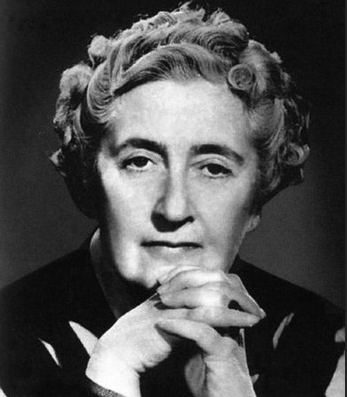
Violet Crawley, Dowager Countess of Grantham

ISTJ - Logistician

Category

TV Show

Nationality

British

Occupation

Aristocrat, Dowager Countess

About Violet Crawley, Dowager Countess of Grantham

Violet Crawley is the formidable matriarch of the Crawley family in the television series *Downton Abbey*. She is known for her staunch traditionalism, razor-sharp wit, and deep devotion to preserving the family's aristocratic legacy, even as the world changes rapidly around her. Her significance lies in being the show's primary source of comic relief and profound wisdom, often delivered through acerbic one-liners.

Personality Profile: ISTJ

Confidence: 85%

Personality Analysis

Violet Crawley is a quintessential ISTJ. Her dominant Introverted Sensing (Si) anchors her entirely in tradition, precedent, and personal experience. She views the past as a reliable guide, measuring all present events and future proposals against a rigid internal catalog of ‘how things are done.’ This function fuels her resistance to change, whether it’s electric lights, newfangled medical practices, or shifts in social hierarchy. Her auxiliary Extraverted Thinking (Te) provides the pragmatic, efficient, and often blunt framework through which she interacts with the world. She cuts through sentiment with logical assessments, makes decisive (if conservative) judgments, and values duty and responsibility above all. This Te-Si combination makes her the family’s unwavering guardian of structure and protocol.

Her tertiary Introverted Feeling (Fi) is less developed but reveals itself in her fierce, though privately held, loyalty and love for her family and estate. While she rarely expresses vulnerability, her actions—such as her subtle manipulations to protect Mary or her begrudging respect for Isobel—stem from a deep, personal value system centered on family integrity. Her inferior Extraverted Intuition (Ne) manifests as a fear of unpredictable, chaotic futures and ‘what-ifs.’ She initially meets any novel idea with suspicion and catastrophic imagining (‘What is a weekend?’), viewing it as a threat to her Si-ordered world. However, when presented with a logically sound case (Te) that aligns with her core values (Fi), she can occasionally surprise everyone by accepting change, demonstrating potential growth in this area.

In interpersonal dynamics, Violet uses her Te to maintain control through witty, critical commentary, establishing herself as the intellectual and social arbiter. Her growth area lies in integrating her inferior Ne: learning to see potential in change rather than just peril. Her evolution throughout the series, from outright hostility to a grudging partnership with Isobel Crawley and her acceptance of certain modernities, shows a slow mellowing as her Fi values of family harmony sometimes compel her to tolerate the new pathways Ne presents.


Supporting Evidence

Her famous line ‘What is a weekend?’ perfectly encapsulates her Si-dominant disconnect from modern, middle-class concepts. Her pragmatic (Te) handling of the crisis with Lady Edith’s illegitimate daughter, arranging for adoption to protect the family’s reputation while ensuring the child’s welfare, shows duty over emotion. Her deep-seated loyalty (Fi) is evident when she secretly intervenes to reconcile Lord Grantham and Cora after the maid Jane incident, acting out of love for family stability despite her disapproval. Her initial horror and eventual acceptance of her grandson-in-law Tom Branson, a former chauffeur, demonstrates the struggle between Si tradition and the pragmatic (Te) and values-driven (Fi) recognition that he is now irreversibly family.

Cognitive Function Stack

Confidence: 85%

The cognitive function stack represents how an individual processes information and makes decisions based on Jungian personality type theory.

Auxiliary Function: Te

Extraverted Thinking - Organizing and structuring the external world logically and efficiently.

Dominant Function: Si

Introverted Sensing - Recalling detailed information and maintaining traditions.

Inferior Function: Ne

Extraverted Intuition - Seeing possibilities and connections in the external world.

Tertiary Function: Fi

Introverted Feeling - Making decisions based on internal values and personal ethics.

Enneagram Personality Profile:

Confidence: 85%

1w2

Big Five Personality Traits

Confidence: 85%

The Big Five personality traits represent the five broad dimensions of personality that are commonly used to describe human personality.

Openness 0%
Conscientiousness 0%
Extraversion 0%
Agreeableness 0%
Neuroticism 0%