Vlad III Drăculea - ISTJ Personality Type

Vlad III Drăculea

ISTJ - Logistician

Category

History

Nationality

Wallachian (Romanian)

Occupation

Prince/Voivode of Wallachia

About Vlad III Drăculea

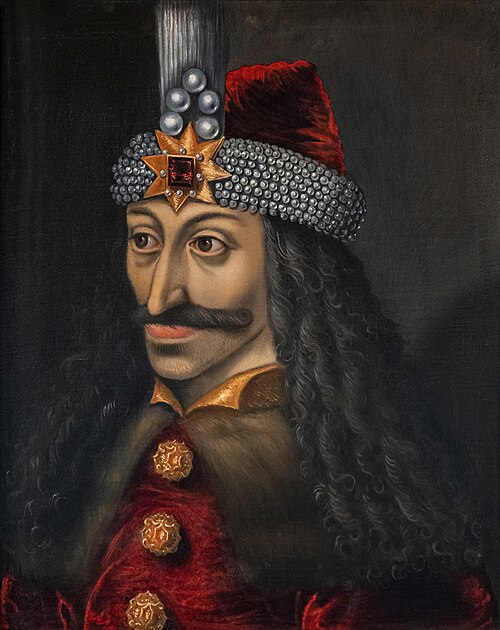
Vlad the Impaler was a 15th-century ruler of Wallachia (now part of Romania), known for his brutal methods of punishing enemies and maintaining order. He is historically significant as a national hero for defending his principality against the Ottoman Empire, but is internationally infamous for his cruelty, particularly the widespread use of impalement as a method of execution. His legend is inextricably linked to the fictional vampire Count Dracula.

Personality Profile: ISTJ

Confidence: 85%

Personality Analysis

Vlad the Impaler’s personality aligns strongly with an ISTJ, dominated by Introverted Sensing (Si) and Extraverted Thinking (Te). His Si is evident in his profound connection to tradition, history, and past experiences. He was fiercely dedicated to the legacy of his father and the independence of Wallachia, viewing his rule through the lens of established order and precedent. His traumatic childhood as a hostage of the Ottoman court forged a worldview where survival depended on absolute control and an unforgiving interpretation of loyalty and betrayal. This Si foundation provided a rigid internal framework of ‘how things should be,’ rooted in a harsh, historical reality.

His auxiliary function, Extraverted Thinking (Te), was deployed with terrifying efficiency to enforce this internal order upon the external world. Vlad was a pragmatist above all else; his infamous cruelty was not random sadism but a calculated system of governance. Impalement was a Te-driven tool: it was a highly efficient, public, and logical consequence for crimes (real or perceived) that served to deter enemies, consolidate power, and instill absolute obedience. His military campaigns and administrative reforms show a focus on brutal, objective effectiveness, with little regard for the emotional or humanitarian cost (low Extraverted Feeling).

The tertiary function, Introverted Feeling (Fi), manifests in a strong, internalized sense of personal justice, honor, and vengeance. While his actions appear purely cold and logical, they were fueled by a deep, personal conviction. His vendettas against the boyars who betrayed his family and his defiance against the Ottomans were matters of intense personal principle. This Fi, however, was private and not used for empathy; it justified his ruthlessness as a righteous duty. His inferior function, Extraverted Intuition (Ne), represents his area of weakness and stress. Under threat, he could become paranoid, seeing chaotic possibilities and conspiracies everywhere (negative Ne). This likely fueled preemptive strikes and extreme measures to eliminate any potential future disorder, as he struggled to envision or trust positive, alternative futures for his realm beyond rigid control and defense.

Supporting Evidence

His implementation of a strict moral code in Wallachia, where crimes like theft and dishonesty were punished with impalement, demonstrates Si-Te in creating a brutally orderly society. The infamous ‘Forest of the Impaled’ at Târgoviște was a calculated Te strategy to terrorize an invading Ottoman army into retreat, showing a pragmatic use of psychological warfare. His personal vengeance against the disloyal Wallachian boyars, whom he invited to a feast only to impale them, reveals a deep Fi-driven sense of betrayal and a Te method of eliminating the threat. His meticulous and patient planning for military campaigns, such as his guerrilla tactics and night attacks, reflect a strategic, detail-oriented (Si-Te) mind rather than an impulsive one. Finally, his lifelong obsession with securing Wallachian independence from external powers, shaped by his early experiences (Si), was the singular, driving principle behind all his actions.

Cognitive Function Stack

Confidence: 85%

The cognitive function stack represents how an individual processes information and makes decisions based on Jungian personality type theory.

Auxiliary Function: Te

Extraverted Thinking - Organizing and structuring the external world logically and efficiently.

Dominant Function: Si

Introverted Sensing - Recalling detailed information and maintaining traditions.

Inferior Function: Ne

Extraverted Intuition - Seeing possibilities and connections in the external world.

Tertiary Function: Fi

Introverted Feeling - Making decisions based on internal values and personal ethics.

Enneagram Personality Profile:

Confidence: 85%

8w9

Big Five Personality Traits

Confidence: 85%

The Big Five personality traits represent the five broad dimensions of personality that are commonly used to describe human personality.

Openness 0%
Conscientiousness 0%
Extraversion 0%
Agreeableness 0%
Neuroticism 0%