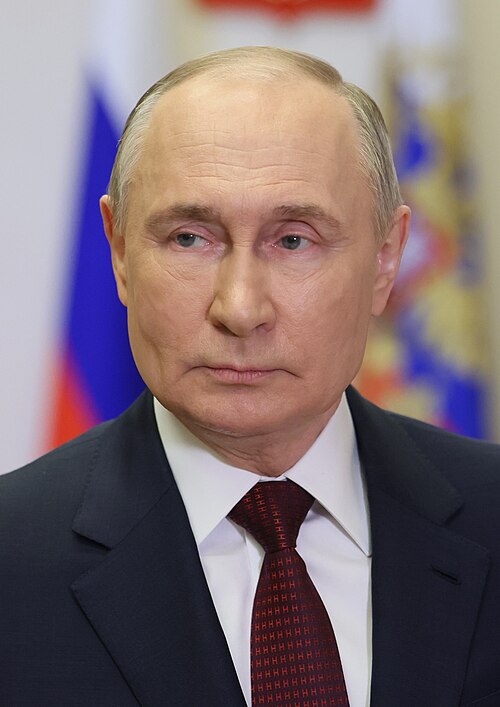
Vladimir Putin’s personality profile strongly suggests an ISTJ (The Logistician) type. His dominant Introverted Sensing (Si) is evident in his deep connection to tradition, history, and established order. He frequently references historical grievances and a perceived ‘glorious past’ of the Soviet Union, using these as a blueprint for his actions and vision of Russia’s future. This function drives his meticulous, detail-oriented approach to governance and his preference for stable, predictable structures. His auxiliary Extraverted Thinking (Te) manifests in his decisive, pragmatic, and often ruthless leadership style. He values efficiency, chain of command, and tangible results, structuring his administration and military operations with a clear, logical hierarchy focused on achieving strategic objectives. This Te-Si axis prioritizes practical control, order, and the restoration of a system based on his interpretation of historical norms.
His tertiary Introverted Feeling (Fi) provides a deeply held, private set of values centered on Russian sovereignty, national pride, and personal loyalty. While he rarely displays public emotion, his actions suggest a strong internal conviction and sense of personal duty to his vision for the nation. This fuels his often unyielding stance in international affairs. The inferior function, Extraverted Intuition (Ne), represents his area of least comfort. He shows a distinct aversion to chaos, unpredictability, and alternative futures that deviate from his planned path. This can lead to a rejection of democratic pluralism, a crackdown on dissent, and a tendency to view geopolitical shifts through a lens of zero-sum competition and conspiracy, rather than collaborative possibility.
Enneagram 8w9 (The Challenger with a Nine-wing) complements this analysis. The core Type 8 explains his need for control, fear of being vulnerable or manipulated, and assertive, domineering approach to power. The 9-wing softens the aggression slightly, contributing to his initial preference for strategic patience, indirect pressure, and a calm, poker-faced demeanor in negotiations, before decisive action. The Big Five scores reflect very high Conscientiousness (order, discipline), very low Agreeableness (antagonistic, uncompromising), low Openness (traditional, resistant to new ideas), and moderate Extraversion (reserved but capable of public performance). This combination paints a picture of a leader who is a consummate institutionalist, operating within a rigid framework of his own making to achieve objectives defined by a blend of historical narrative, pragmatic calculation, and personal will.