Geralt of Rivia - ISTP Personality Type

Geralt of Rivia

ISTP - Virtuoso

Category

Game

Nationality

Rivian (Kingdom of Rivia)

Occupation

Witcher (Monster Hunter for Hire)

About Geralt of Rivia

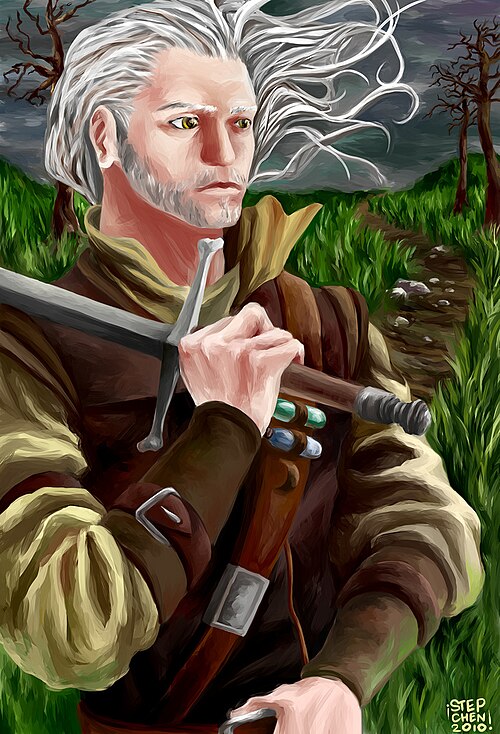
Geralt of Rivia is a professional monster hunter known as a Witcher, a magically enhanced human trained from childhood to slay dangerous beasts. He is a central figure in Andrzej Sapkowski's book series and the subsequent video game franchise, known for his cynical worldview, moral complexity, and relentless pursuit of contracts in a grim, morally grey world. His significance lies in his deconstruction of the fantasy hero archetype, often forced to choose between lesser evils rather than clear-cut good and evil.

Personality Profile: ISTP

Confidence: 85%

Personality Analysis

Geralt is a quintessential ISTP, primarily driven by Introverted Thinking (Ti). This function manifests in his analytical, logic-first approach to every situation. He deconstructs problems (monsters, political intrigues, moral dilemmas) into their component parts, seeking the most efficient and practical solution based on an internal framework of cause and effect. His motto of ‘lesser evil’ is a Ti conclusion, rejecting abstract ideals for situational logic. His decision-making is reactive and grounded in the present moment, rarely guided by long-term plans or sentimental attachments.

His auxiliary function, Extraverted Sensing (Se), is crucial to his profession. He is a master of his physical environment, with heightened reflexes, acute observation of immediate details (tracks, smells, sounds), and a talent for improvisation in combat. He lives in the ‘here and now,’ engaging with the world through direct experience and action. This Se-Ti loop makes him the ultimate pragmatist and problem-solver in tangible, often violent, crises.

Interpersonally, his inferior Extraverted Feeling (Fe) explains his famous emotional detachment, social awkwardness, and gruff exterior. He struggles with communal harmony and often misreads or intentionally disregards social niceties. However, his deep, if poorly expressed, care for his close circle (Ciri, Yennefer, Dandelion) reveals the Fe in its immature state—clumsy, overwhelming when it surfaces, and a source of internal conflict. His tertiary Introverted Intuition (Ni) provides him with occasional gut instincts and foresight, often about the hidden nature of contracts or people, which he trusts due to his experiential database (Ti-Se).

Growth for Geralt involves integrating his inferior Fe. Throughout his journey, he is repeatedly pulled into the emotional lives of others and grander narratives (the fate of Ciri, the politics of the North). His development is marked by moving from a detached contractor to a fiercely protective father figure, learning that some bonds and responsibilities transcend cold logic and personal codes, requiring emotional investment and a consideration for the collective good.

Supporting Evidence

His insistence on neutrality and the ‘Witcher’s Code’ (a largely invented personal framework) showcases Ti’s need for an internal logical system. In combat, he fluidly assesses his opponent’s movements and the terrain (Se) to apply potions, signs, and swordplay in the most effective combination (Ti). His infamous ‘Butcher of Blaviken’ title resulted from a Ti-Se calculation of the immediate, practical necessity to prevent a greater massacre, utterly disregarding social perception (inferior Fe). His relationship with Ciri forces him to prioritize emotional connection and protective duty over his preferred life of detached contracts, representing his struggle with Fe. His dry, sarcastic commentary in conversations, often pointing out logical flaws or hypocrisies in others’ statements, is a classic Ti expression.

Cognitive Function Stack

Confidence: 85%

The cognitive function stack represents how an individual processes information and makes decisions based on Jungian personality type theory.

Auxiliary Function: Se

Extraverted Sensing - Experiencing and interacting with the immediate environment.

Dominant Function: Ti

Introverted Thinking - Analyzing and categorizing information logically and precisely.

Inferior Function: Fe

Extraverted Feeling - Connecting with others and maintaining social harmony.

Tertiary Function: Ni

Introverted Intuition - Perceiving underlying patterns and developing long-range visions.

Enneagram Personality Profile:

Confidence: 85%

8w9

Big Five Personality Traits

Confidence: 85%

The Big Five personality traits represent the five broad dimensions of personality that are commonly used to describe human personality.

Openness 0%
Conscientiousness 0%
Extraversion 0%
Agreeableness 0%
Neuroticism 0%

Similar ISTP Characters

Explore other characters with similar personality traits