Spartacus - ISTP Personality Type

Spartacus

ISTP - Virtuoso

Category

History

Nationality

Thracian

Occupation

Gladiator, Rebel Commander

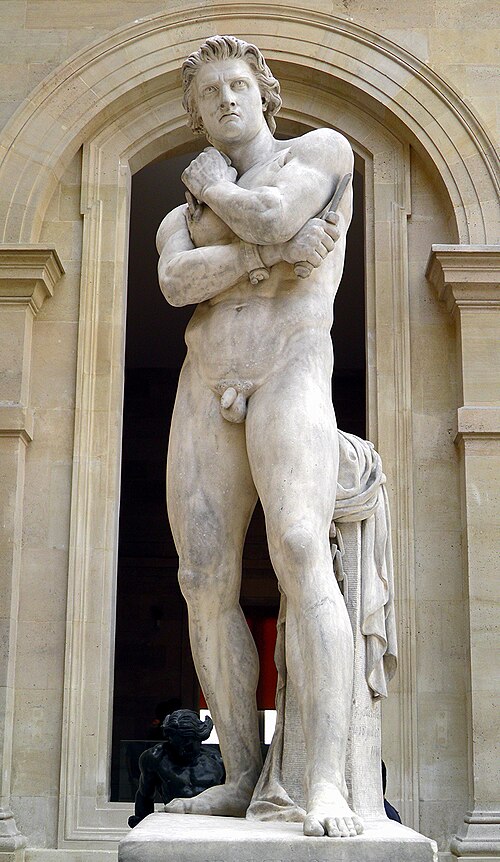
About Spartacus

Spartacus was a Thracian gladiator who led a major slave uprising against the Roman Republic from 73 to 71 BCE. He is known for his military skill, leadership, and a profound desire for freedom, turning a small band of escaped gladiators into a large army that challenged the Roman legions. His rebellion, though ultimately crushed, remains a powerful symbol of resistance against oppression.

Personality Profile: ISTP

Confidence: 85%

Personality Analysis

Spartacus exemplifies the ISTP personality type, driven by Introverted Thinking (Ti) and Extraverted Sensing (Se). His dominant Ti manifests in a pragmatic, analytical, and internally consistent approach to problem-solving. He was not an ideologue fighting for a grand political vision, but a tactician focused on the immediate, logical goal of survival and freedom for his people. He devised clever strategies, used the terrain to his advantage, and adapted his plans based on cold, hard facts, such as when he chose to winter on Mount Vesuvius and use its natural defenses. His auxiliary Se is powerfully evident in his comfort with action, physical prowess, and acute awareness of his environment. As a former gladiator, he was a master of his body and weapons, and his leadership style was hands-on, leading charges and fighting alongside his men. He processed information in real-time, reacting to the unfolding battlefield with speed and precision. This Se-Ti combination made him a formidable, improvisational commander who thrived in the chaos of conflict. Interpersonally, the ISTP’s inferior Extraverted Feeling (Fe) can be seen in his struggle with group harmony and long-term social cohesion. While fiercely loyal to the cause of freedom and capable of inspiring deep devotion, his focus remained on practical outcomes over emotional bonds or complex political alliances. This likely contributed to the eventual fragmentation of his army when strategic disagreements arose. His tertiary Introverted Intuition (Ni) provided flashes of foresight, such as his recognition that a permanent victory over Rome was unlikely, but his core decision-making was grounded in tangible, present-moment logic. As an Enneagram 8w9, his core drive for autonomy, control, and protection of the vulnerable (Type 8) is channeled through a more receptive, stabilizing wing (9w), which helped him unite diverse groups. He was a protective, decisive leader who sought peace through strength, preferring to avoid unnecessary conflict but willing to unleash overwhelming force when challenged. His growth area, typical for an ISTP 8, would involve developing a stronger capacity for long-term strategic vision and coalition-building beyond immediate tactical needs.

Supporting Evidence

His initial rebellion was a pragmatic, opportunistic act of seizing kitchen tools to fight their way out of the gladiatorial school, demonstrating Ti-Se problem-solving. His military campaigns showcased his tactical adaptability, such as outmaneuvering Roman forces by using improvised ropes to descend the cliffs of Vesuvius. He enforced a strict code of fairness, dividing spoils equally and forbidding gold and silver among his troops, reflecting his internal Ti logic for maintaining unit cohesion. His ultimate decision to turn his army north to cross the Alps for freedom, rather than continuing to plunder Italy, showed a logical, goal-oriented (Ti) assessment of their long-term survival, even against the wishes of parts of his army driven by short-term gain (inferior Fe group dynamics). Finally, his stoic acceptance of death in the final battle, fighting to the last, aligns with the ISTP’s resilient, present-focused demeanor.

Cognitive Function Stack

Confidence: 85%

The cognitive function stack represents how an individual processes information and makes decisions based on Jungian personality type theory.

Auxiliary Function: Se

Extraverted Sensing - Experiencing and interacting with the immediate environment.

Dominant Function: Ti

Introverted Thinking - Analyzing and categorizing information logically and precisely.

Inferior Function: Fe

Extraverted Feeling - Connecting with others and maintaining social harmony.

Tertiary Function: Ni

Introverted Intuition - Perceiving underlying patterns and developing long-range visions.

Enneagram Personality Profile:

Confidence: 85%

8w9

Big Five Personality Traits

Confidence: 85%

The Big Five personality traits represent the five broad dimensions of personality that are commonly used to describe human personality.

Openness 0%
Conscientiousness 0%
Extraversion 0%
Agreeableness 0%
Neuroticism 0%

Similar ISTP Characters

Explore other characters with similar personality traits